Look at the safest jobs in your country. Then look at the fastest-growing budgets. Look at who takes the risk—and who writes the rules.
The modern state was built to replace arbitrary power with law. It protects property, enforces contracts and makes markets possible. But it has also become the safest employer, the largest client, the main insurer and often the final judge of what may be built.
At what point does support become dependency—and who is ultimately working for whom?
Loading...
Nothing dramatic marks the moment when the relationship changes. Private companies remain. Property remains. Elections remain. The change appears in the incentives: where talent goes, who carries the risk, who finances the promises—and how difficult it becomes to act without approval.
The new gatekeeper does not wear a crown. It has no face and sends a compliance memo. (source)
Part 1 argued that capitalism helped replace status and personal permission with ownership, contracts, credit, companies and markets.
Part 2 asks whether modern democracies are quietly rebuilding the permission systems capitalism once displaced.
The old gatekeeper wore a crown.
The new one asks you to use the portal.
1. The State Was Supposed To Replace Personal Power With Rules
This is important: the modern state is not the enemy of capitalism.
Without courts, contracts, property law, money, public order, infrastructure, education, basic health and predictable rules, capitalism does not work. It becomes theft with invoices.
A functioning state is one of the great inventions of modern society. It helped replace personal power with impersonal law. The point was simple and radical: your life should not depend on the mood of the landlord, the priest, the guild master, the local noble or the mayor’s cousin.
Max Weber understood this better than almost anyone. He analysed the modern state as rule through offices, procedures, competence and written rules rather than personal loyalty or inherited privilege. That was the improvement: bureaucracy helped replace personal power with impersonal administration.1
But Weber was not naive about the machine he described. He warned that once bureaucracy is fully established, it becomes one of the hardest social structures to destroy. Its strength is also its danger: it is efficient, impersonal, rule-bound — and therefore very difficult for ordinary citizens to control once it expands.2
That is exactly the tension of the modern state. Bureaucracy was meant to replace arbitrary personal power. If it grows too far, it becomes a new permission system: not the lord’s mood, but the office’s process.3
The old permission system said: “You may work, trade or build if the person above you allows it.”
The modern version says: “You may work, trade or build if the process allows it.”
Cleaner language. Same smell.
Once the state becomes the main rule-maker, the next question is simple: how much of productive life does it need to finance itself?
2. Taxation Reveals the Real Structure of the State
In The Crisis of the Tax State, written after the First World War, Schumpeter treated public finance not as accounting detail but as political anatomy. How a state raises money, how much it needs, and what it spends it on tells us what kind of state it has become.4
Modern citizens often underestimate this because taxation has become fragmented and partly invisible.
It is not one medieval tithe collected at the gate. It is:
income tax,
payroll tax,
employer social contributions,
VAT,
capital gains tax,
wealth-related taxes,
property taxes,
health premiums,
pension contributions,
fees,
charges,
mandates,
compliance costs
and fiscal drag.
Some of this funds necessary public goods. Some of it funds real social protection. Some of it funds things voters genuinely want.
That has to be said.
But the total claim on productive work has become enormous. Schumpeter was writing about a state that would appear remarkably small today. Historical estimates put Austria’s total tax revenue at around 17% of GDP in 1913, the last normal year before the First World War. Today, taxes and social contributions absorb roughly 44% of Austrian GDP. The tax state Schumpeter examined did not remain a warning. It became the model.56
The American comparison is even more striking. When the modern federal income tax arrived in 1913, fewer than 1% of Americans paid it, initially at a rate of just 1% of net income above generous exemptions. What began as a narrow tax on high earners eventually became a permanent claim on ordinary wages.7
Weber warned that bureaucracy, once fully established, becomes exceptionally difficult to dismantle. Schumpeter showed that taxation reveals how far the state has expanded. A century later, we no longer need to ask whether their warnings were justified. We need to ask whether the machine can still be controlled.
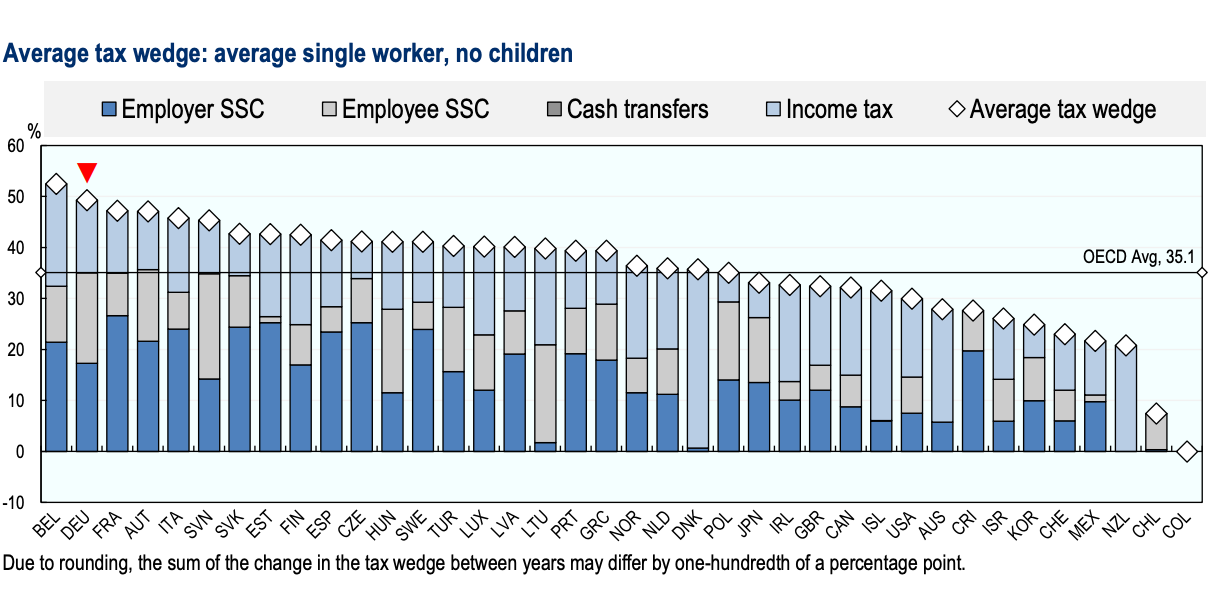
In Germany, the OECD reported that the tax wedge for an average single worker rose from 47.9% in 2024 to 49.3% in 2025. The tax wedge measures the gap between what an employer pays and what the worker takes home, including income tax and employee and employer social security contributions.8
Pic. OECD tax wedge, average single worker. Left side: countries where your salary goes on holiday before you do. (source)
That number does not mean every German “pays half to the state” in every possible sense. Tax systems are more complicated than good dinner-table anger allows. It also does not include everything citizens pay indirectly or receive back through services.
But as a political signal, it is brutal.
For a large part of the year, the economic relationship is not mainly between worker and family, founder and customer, employer and employee. It is between productive work and the fiscal system built around it.
The United States tells a similar story in historical form. Federal income tax was not invented for the Second World War. The 16th Amendment made federal income tax constitutional in 1913. But the modern mass income-tax system expanded dramatically during the war. In 1943, Congress passed the Current Tax Payment Act, which required employers to withhold taxes from wages and remit them to the government.910
That was a war mechanism.
Then it stayed.
This is how the state grows: emergency, normalisation, permanence.
Money is one side of state power. Permission is the other.
The old world controlled access through land, guilds, charters and privilege.
The modern world controls access through regulation, reporting, permits, compliance, subsidies and administrative discretion.
Again, the point is not that rules are bad. Some rules protect markets. Fraud rules protect trust. Safety rules protect life. Competition rules protect customers. Banking rules protect the system from bankers discovering leverage, again, with the innocence of toddlers near matches.
The problem starts when the rule system becomes so dense that it stops protecting productive activity and starts replacing it.
Europe is now admitting this problem openly.
The European Commission says it wants to cut administrative burdens by at least 25% for companies and 35% for SMEs, with expected savings of €37.5bn by 2029.11 Brussels has promised this before: after declaring a previous 25% reduction achieved in 2012, it is now promising another—so it remains a press release until companies complete fewer forms and spend less time waiting for approval.12
The IMF makes the problem larger. It estimates that remaining barriers inside the EU are equivalent to an average tariff of about 44% on goods and 110% on services.
These numbers should be used carefully. Economists can fight for weeks over measurement. It is a charming hobby, if one has lost all fear of death.
But the direction is clear: Europe does not have one fully frictionless market. It has a legal promise of a single market plus a large number of national, regulatory and administrative frictions.13
Mario Draghi’s competitiveness report points in the same direction: Europe’s regulatory burden is especially costly for smaller companies and digital firms, while the Single Market remains fragmented in important areas.14
This is the modern permission system.
Nobody says “you may not build.”
They say: demonstrate compliance, file the report, wait for approval, meet the standard, apply for the subsidy, hire the officer, document the process, update the policy, and please use the portal.
Naturally, the portal is slow—and the UX assumes you helped design it.
A country is not a company. But the analogy helps.
A company needs internal services: finance, HR, legal, IT, compliance. Without them, the business breaks. But these teams do not directly sell to customers. They make the business work; they do not feed it directly. If they grow faster than product, sales, engineering and customer work, the company becomes heavier. More people manage the system. Fewer people carry the market.
A country has the same tension.
The state provides courts, roads, schools, security, administration and basic social protection. These things matter. A serious market economy needs them. But the taxable surplus still has to be created by people and firms exposed to customers, competition, failure, investment and risk.
If the protected side of the economy becomes more attractive than the market-exposed side, the country starts training its people for comfort instead of contribution.
This is why the Swiss data is useful beyond Switzerland.
Switzerland is small, but it is not a weak or dysfunctional state. It is rich, stable, educated, high-trust and globally competitive. If a comfort-economy pattern appears there, readers elsewhere should ask where similar incentives show up in their own country.
In parts of Europe, the pattern may show up as public and state-near employment. In the US, it may show up more through entitlement promises, subsidies, defence procurement, healthcare dependency, student-loan politics, protected industries or deficit-funded profits. The form changes. The question stays: are more people building the surplus, or organising claims on it?
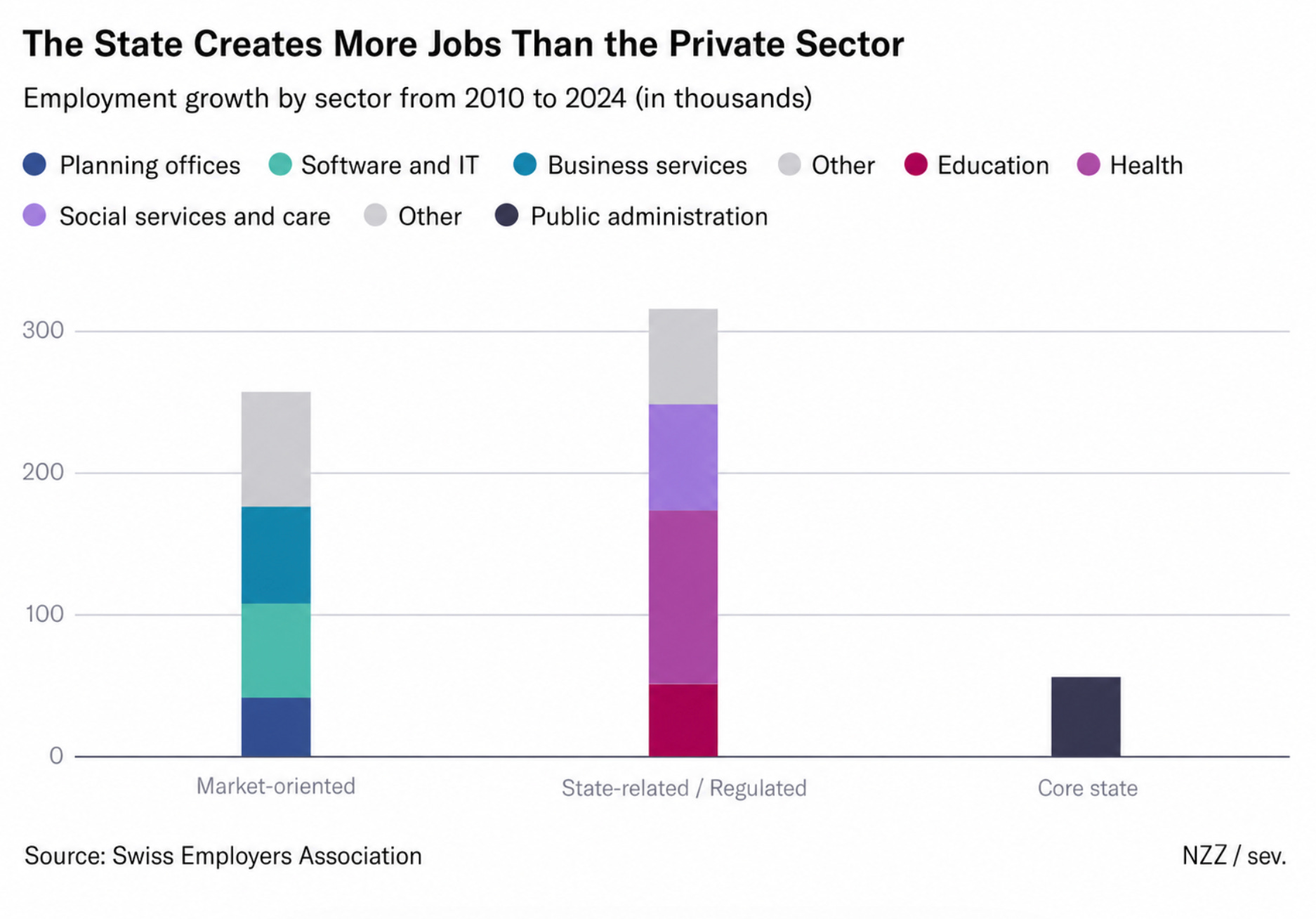
Pic. Swiss Made was meant to describe what we build, not where we hide.
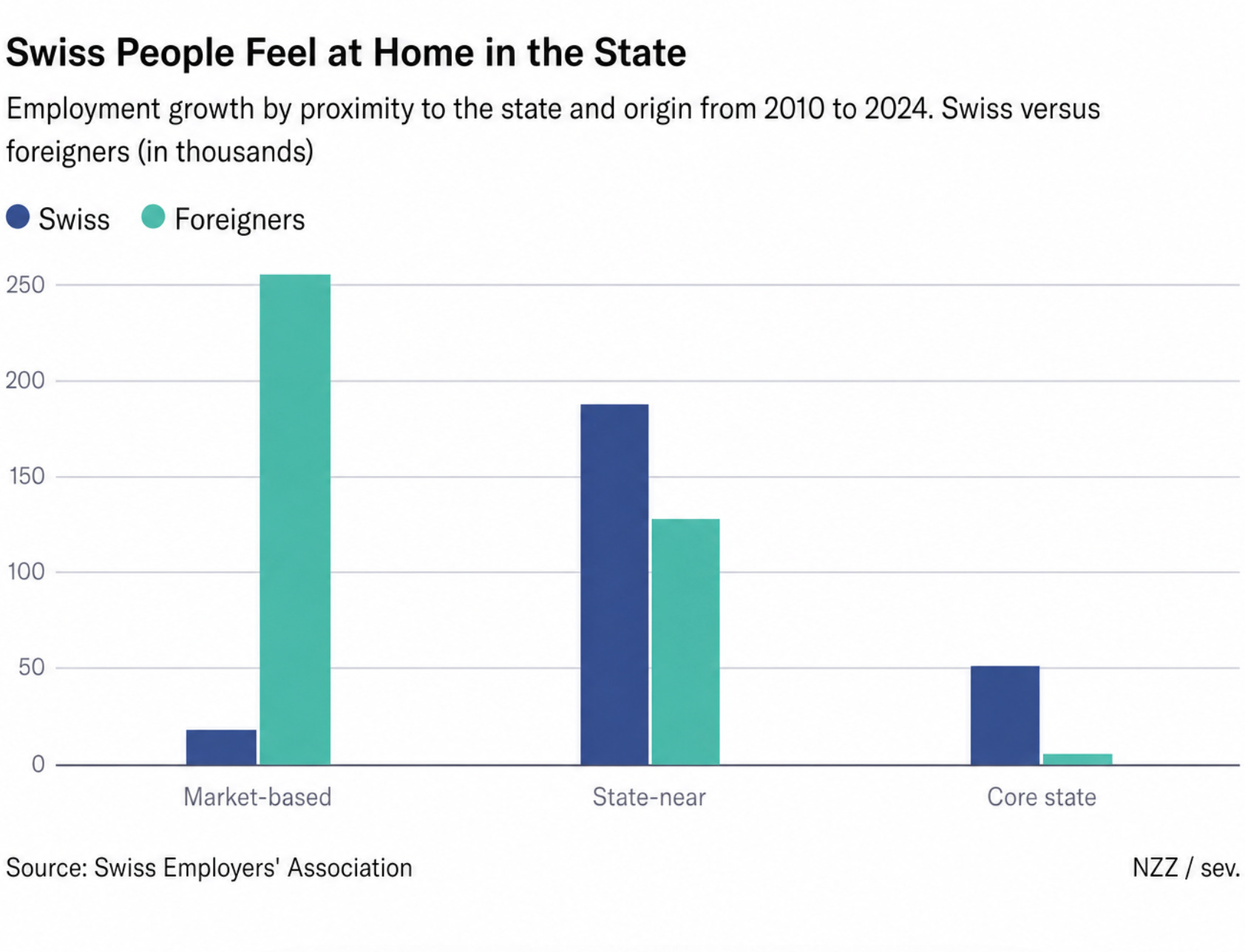
The NZZ article cites an employer-side analysis by the Swiss Employers’ Association based on Swiss labour-force data. According to that analysis, from 2010 to 2024, employment in the core state and state-near sectors grew by around 370,000 people, while private-sector employment grew by around 260,000. It also claims that 93% of additional private-sector employment came from foreigners, while only around 6% came from Swiss workers.1516
Pic. The private sector called. Foreigners picked up.
The source has an angle. It is employer-side analysis, not neutral gospel.
Still, the signal is hard to ignore.
It points to an uncomfortable division of labour. Immigrants appear to carry much of the market-exposed growth Switzerland says it needs, while many locals move toward the safer side of the labour market. That makes the immigration debate harder, not easier.
A country cannot rely on foreigners to carry much of the competitive private-sector growth, complain about immigration, expand protected employment, vote itself more benefits, and then ask the next generation to pay the invoice.
That is not solidarity.
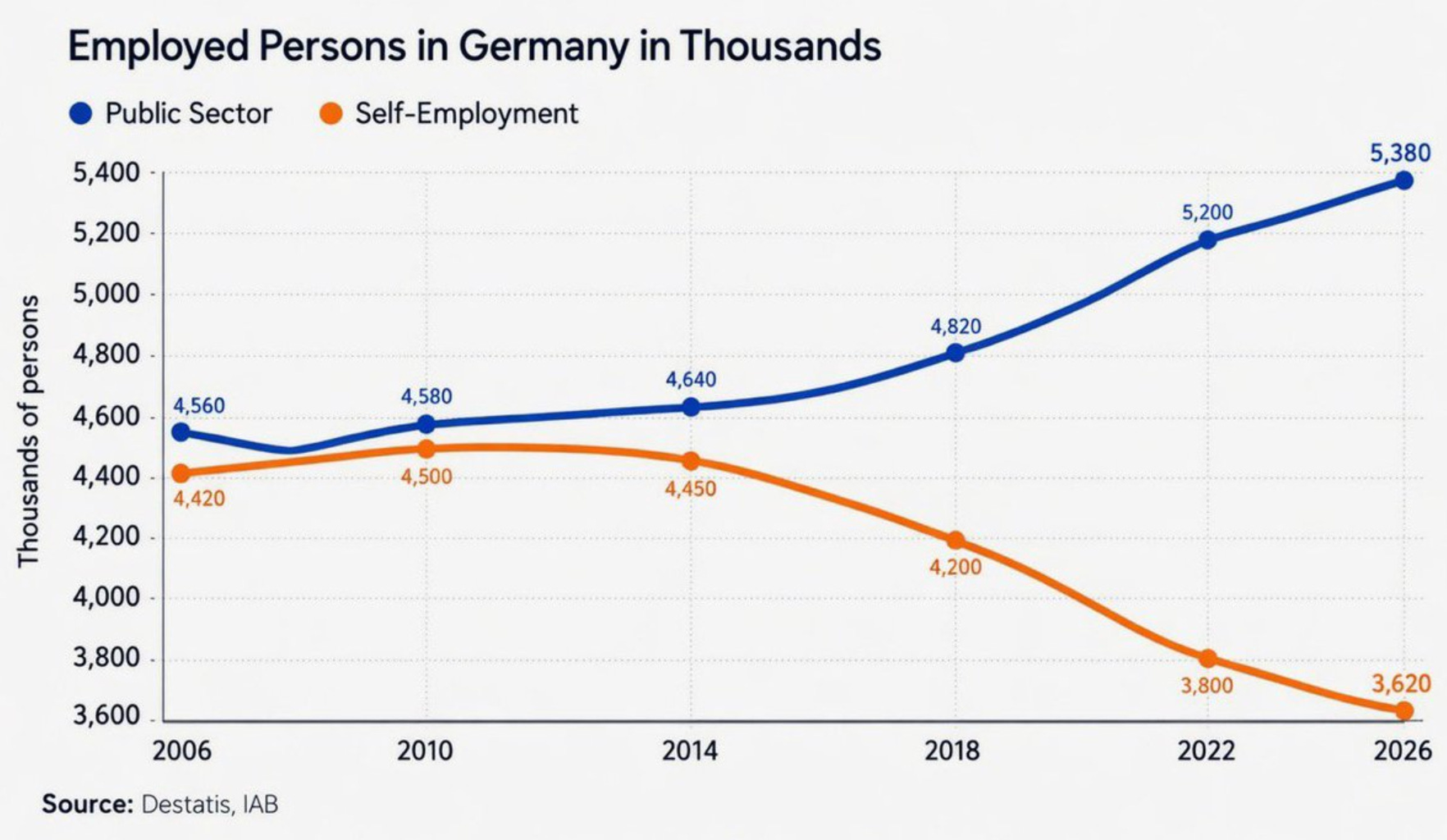
Germany points in the same direction. The exact sources and definitions differ, so we should not overread the chart. But the signal is similar: public-sector employment rises while self-employment falls. Another comfort-economy pattern. Different country, same question: who is still choosing productive risk?
Pic. Self-employment left the meeting early. The public sector stayed, took minutes, and opened a working group.
The IZA review on public-sector employment gives the necessary caveat. Public-sector employment can crowd out private employment in some contexts, but the effect is not automatic. It depends on institutions, labour markets and the state of the economy.17
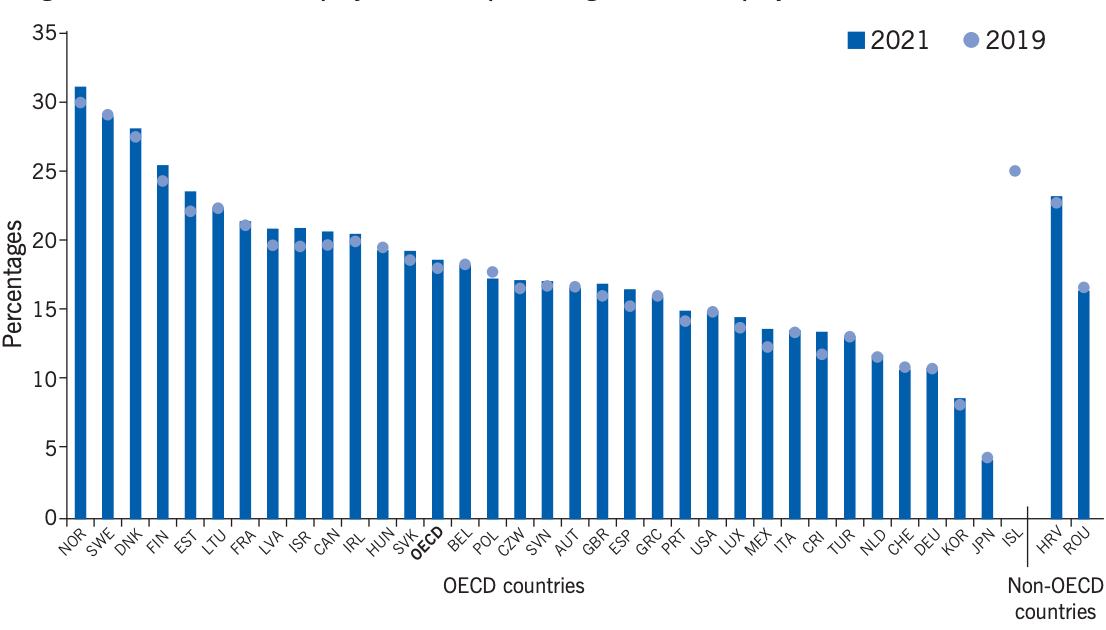
Pic. Public sector employment as a percentage of total employment, 2019 and 2021. BTW: Norway leads the OECD: roughly one in three workers is employed by government. Norway can run this model because it found oil, built a giant fund, and invested globally. Elegant — unless the giant fund also has a giant bad year. (OECD, Norwegian Government)
So the point is not “public employment is bad”.
A society cannot make the safest careers the most attractive ones, push productive risk onto founders, private firms, immigrants and the next generation, and then act surprised when fewer people build.
The surplus does not appear because a committee scheduled a meeting.
Someone still has to build it.
5. When Voters Spend Tomorrow’s Surplus
The comfort economy does not stop with career choices. It changes politics. Once more citizens, companies and institutions depend on public benefits, protected prices, subsidies or government contracts, elections increasingly revolve around preserving and expanding those claims.
The political incentive is powerful because the benefit and its cost arrive differently. The benefit is immediate, personal and easy to understand. The cost is divided among millions of taxpayers, hidden inside borrowing or postponed into the future. Current voters receive the promise. Future workers receive the invoice—and they were not in the room when it was approved.
B O X
The Benefit Came First. The Invoice Came Later.
Switzerland provides a clean example of how this political ratchet works. In 2024, 58% of voters approved a 13th annual pension payment—effectively an extra month’s pension, although the initiative did not specify how it would be financed. The additional pension will cost CHF 4–5 billion annually and will first be paid in December 2026.
Only afterwards did parliament propose raising VAT by 0.4 percentage points from 2028. Even that would generate only around CHF 1.5 billion annually, leaving much of the additional cost unresolved. Voters will decide on this partial financing in November 2026.18
This is democratic sequencing at its most convenient: approve the benefit first, postpone the invoice, and leave future workers and taxpayers to close the gap. The recipients and the promise were visible on voting day. The full cost was not. 19
America’s economic culture is different, but it is not immune to the same political incentive. The 2026 Social Security Trustees Report projects that reserves in the main old-age fund will be depleted in late 2032. After that, continuing income would cover only 78% of scheduled benefits. The Congressional Budget Office also projects federal debt held by the public to rise from 101% of GDP in 2026 to 120% in 2036, while increasing spending on Social Security, Medicare and interest drives much of the growth in federal outlays.20
Together, the Swiss vote and the American projections expose a demographic ratchet that reaches far beyond either country: ageing societies place more pension recipients above fewer workers; in democracies, those recipients also gain electoral weight. The young inherit the system—and the invoice.
Pic. The benefits have reached the beach. The invoice is still at work. (source: ChatGPT)
None of this is secret. The numbers are published, discussed and updated regularly. Yet serious reform is postponed because reducing a visible benefit is politically harder than creating an invisible future liability. Democracy becomes very good at approving promises and remarkably bad at presenting the complete invoice.
This is not an argument against pensions, healthcare or social protection. It is an argument against offering benefits without asking the current generation to pay their real cost. A society can democratically choose a generous welfare state. But when it finances present comfort with future taxes and debt, it is no longer simply redistributing today’s surplus. It is spending tomorrow’s surplus before tomorrow’s workers have created it.
That is how the state-dependency trap becomes self-reinforcing. More people acquire claims on the system, reform becomes more politically expensive, and the burden placed on productive work continues to grow. Politics gradually stops asking what the country can build and starts asking what the state can still promise.
6. America Still Remembers How to Build
I am not neutral in this comparison. Almost everything I have achieved as an entrepreneur was made possible by the United States—its technology, capital, openness to outsiders and willingness to take ambitious ideas seriously before they have proved themselves. Without America, I would not have come close. StudioAlpha is based in San Francisco for the same reason.
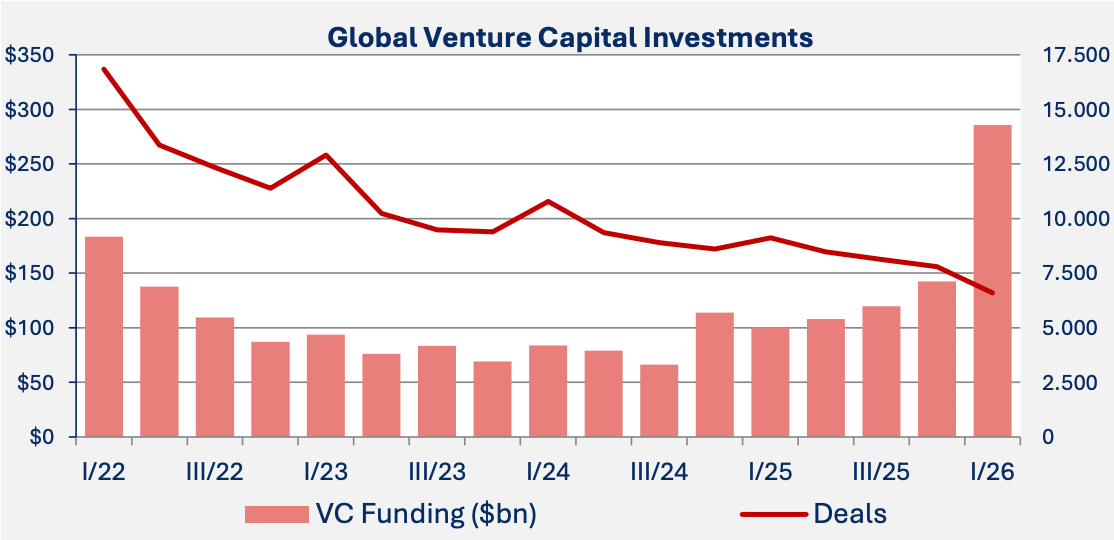
The numbers are difficult to argue with. In the first quarter of 2026:
🇺🇸 US companies attracted approximately $236 billion of the $286 billion invested globally in venture capital—around 83%.
🇪🇺 Europe received $22 billion, or 7.8%.
🇨🇳 China, with roughly $20 billion, ranked second among individual countries.
🇫🇷 France attracted $3.2 billion, accounting for little more than 1% of the global market.
The quarter was distorted by enormous AI rounds, especially OpenAI’s $122 billion financing. But that distortion is also part of the story. Companies can raise sums of that size in the United States because the country has built the capital markets, technical talent, ambition and tolerance for risk required to support them. OpenAI’s single round was several times larger than all the venture capital raised in France and Germany combined.
Venture capital is not a perfect measure of national culture. But it is revealed preference. It shows where investors believe ambitious companies can be created, financed and scaled. Europe increasingly markets innovation. America still finances it.
Europe has a different economic mood. It is more cautious about risk, more suspicious of scale and more likely to reach for regulation before growth. Germany’s tradition of Kulturpessimismus—a mood increasingly visible in Switzerland too—captures part of it: the future is viewed first as a risk to manage rather than an opportunity to build. When someone succeeds anyway, admiration can quickly turn into suspicion. Exceptional success is treated as evidence that someone must have cheated, exploited the system or taken too much. The old European tribal instinct closes ranks.
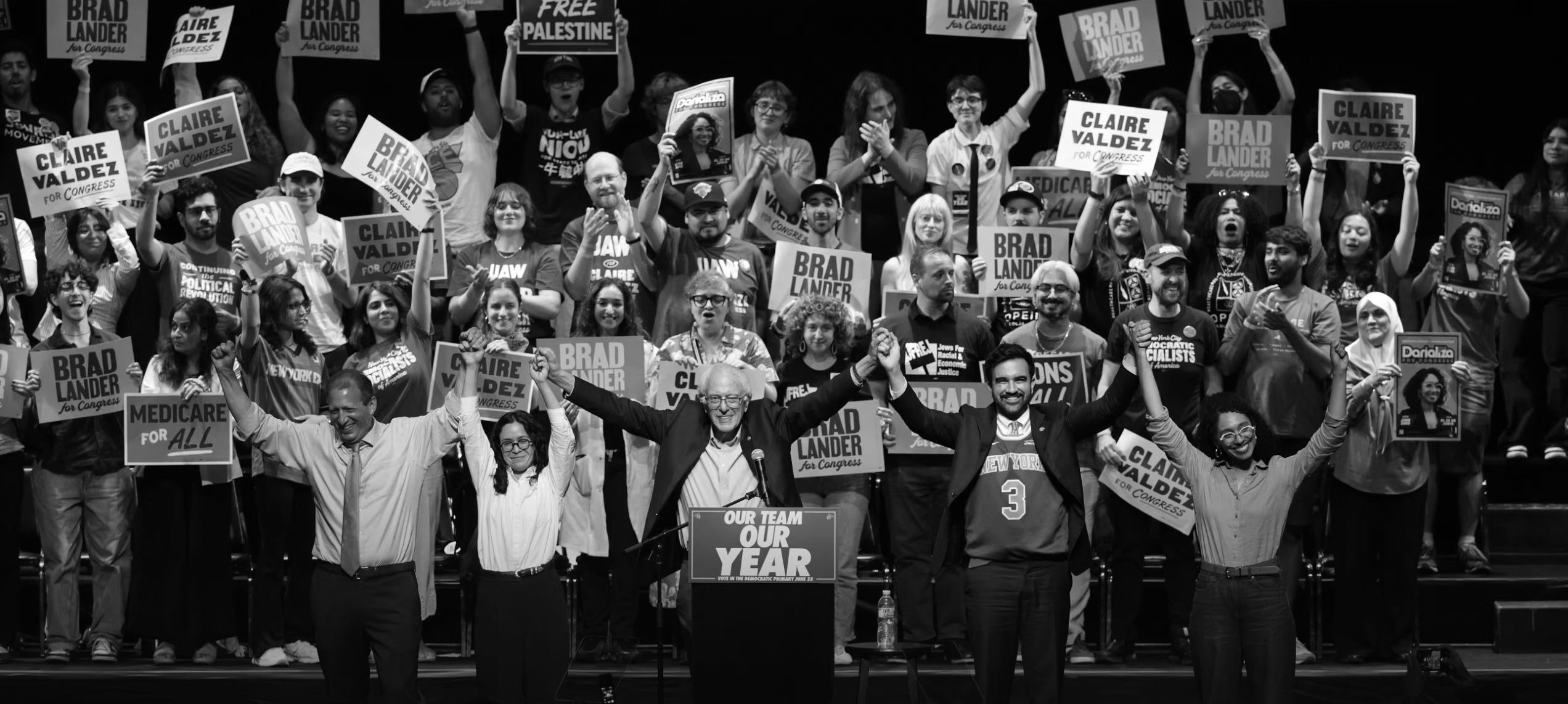
America’s builder culture is not uncontested. The Wall Street Journal reports that the Democratic Socialists of America now has more than 120,000 members, roughly half of whom joined after late 2024. That is tiny in a country of more than 300 million people, but concentrated minorities can influence low-turnout primaries and move the boundaries of a much larger party. The American instinct to build should not be treated as permanent.22
Pic. Sen. Bernie Sanders and New York City Mayor Zohran Mamdani with Democratic Socialist candidates at a rally in New York on June 18. (source)
American capitalism is not pure market heroism either. Ruchir Sharma argues in the Financial Times that recent corporate profits have been supported partly by deficits, tax cuts and public spending. Defence research, infrastructure and public science also helped create technologies and companies, including Silicon Valley. Government involvement is therefore not the dividing line. The question is whether the state builds capabilities that private enterprise can use—or dependencies that firms and voters cannot escape.2324
That remains the real difference.
America still more often asks: can it be built?
Europe too often asks: has it been approved?
That difference compounds.
7. Complexity Is a Moat
That last question matters because regulatory burdens do not fall equally. A large company can spread the cost of lawyers, compliance officers, reporting systems and government-relations teams across billions in revenue. A young company must pay many of the same fixed costs before it has enough customers to survive.
That creates a perverse result. Rules introduced to control corporate power can make powerful corporations even stronger. Established companies can absorb complexity, learn to navigate it and sometimes influence how it is written. For them, another reporting obligation is a hiring decision. For a founder, it may consume the money and time needed to build the product.
The OECD confirms that regulatory complexity and compliance costs disproportionately harm new firms and SMEs. IMF research across 64 countries reaches the same conclusion from another direction: costly entry regulations weaken competition and allow incumbent firms to retain more market share and economic rent.2526
The result is not necessarily better capitalism. It is a more protected version of capitalism in which large companies become better at managing government while smaller challengers struggle to reach the market. Corporate power and administrative power begin to reinforce each other.
B O X
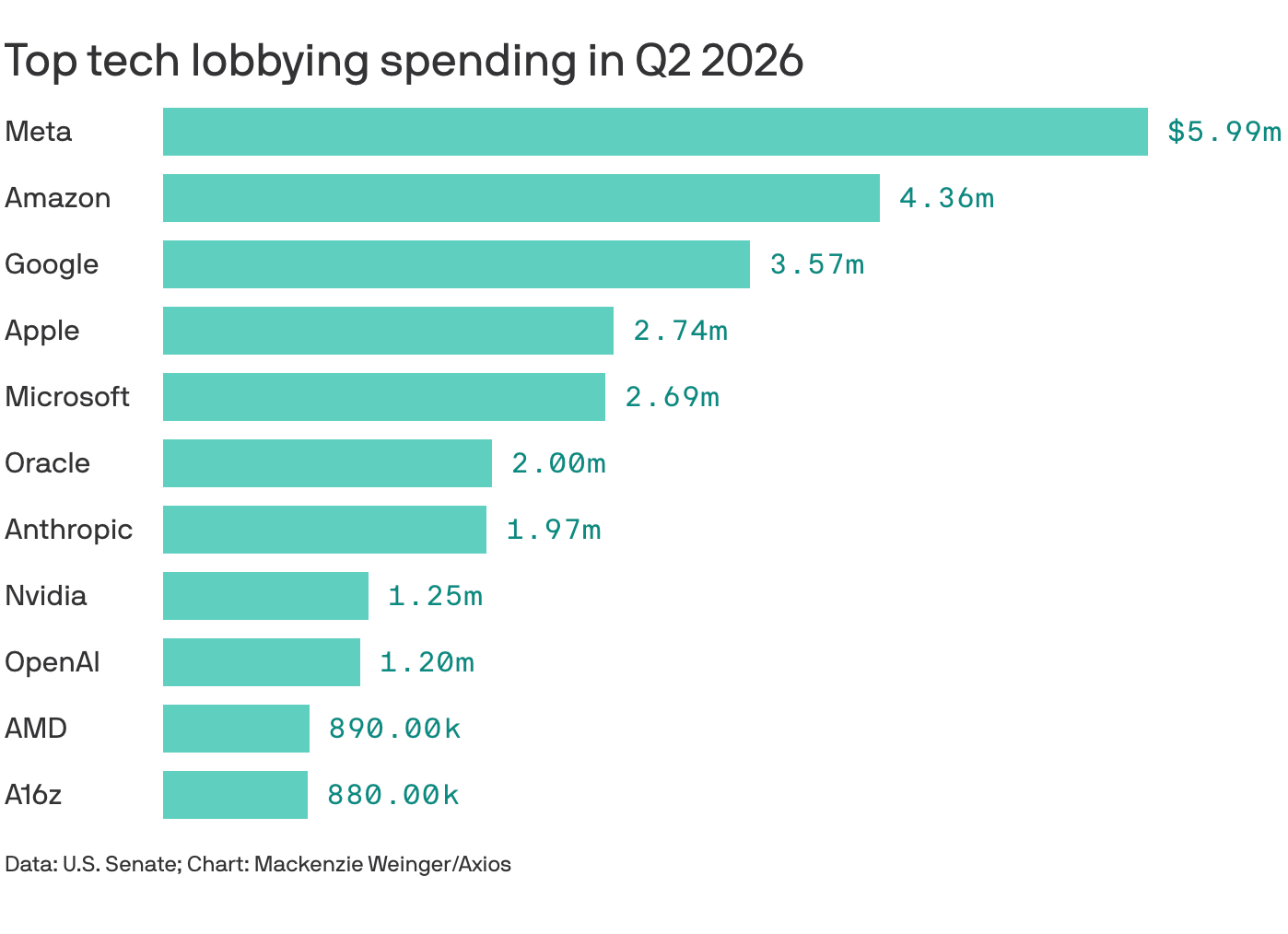
Anthropic ramps up lobbying spending amid AI policy fights
Anthropic provides a current example. In 2026, it donated $20 million to Public First Action, a nonprofit that finances super PACs campaigning for its preferred approach to AI regulation. Separately, Anthropic spent more than $3.5 million lobbying Washington during the first half of the year. The issue is not whether its proposals are right or wrong. It is that a well-funded incumbent can spend millions helping to define the rules every future competitor must obey. A startup cannot.2728
(source)
Rules remain necessary. The test is whether they protect competition or protect the competitors already inside. Once the cost of compliance becomes a moat, bureaucracy no longer restrains concentrated power. It helps preserve it.
Our View: The Test Is Builders Or Clients
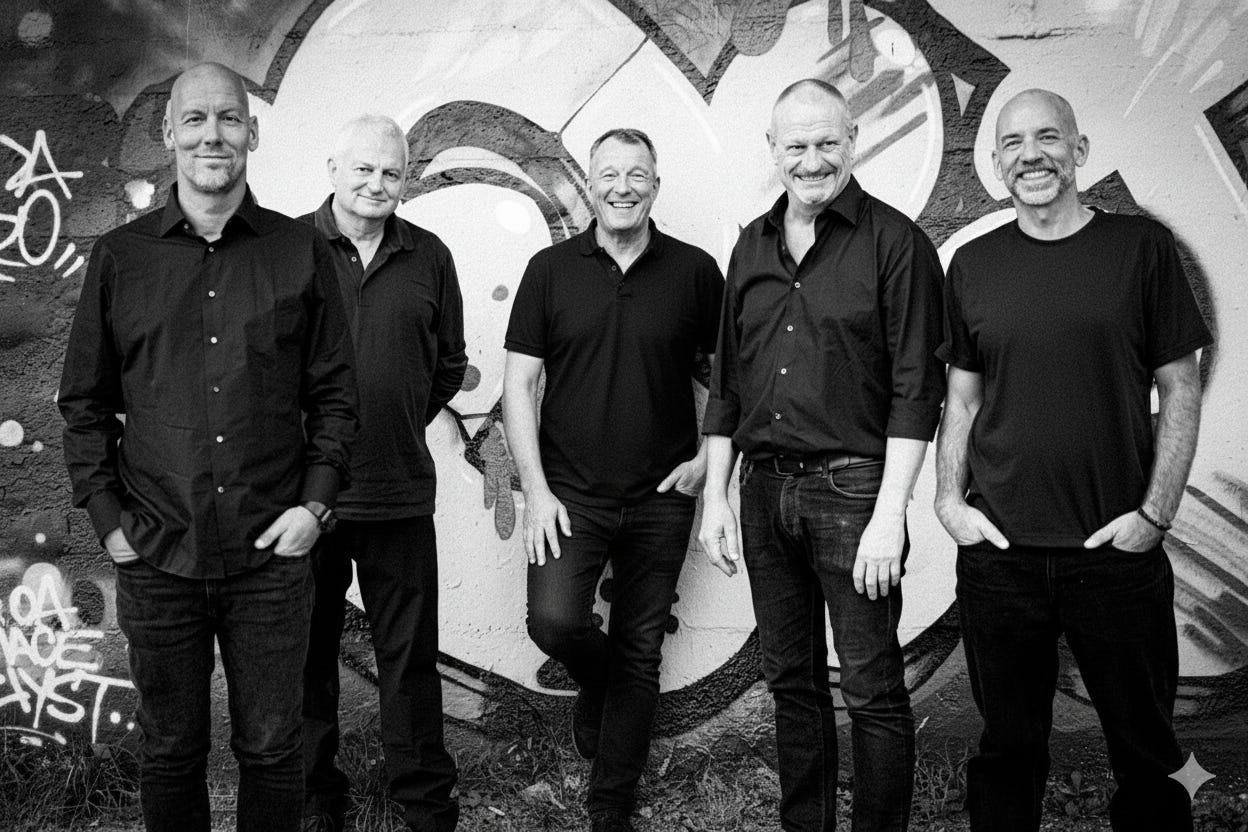
Pic. me, Andrej, Stef, Prof. Andy, Lukas (source: StudioAlpha)
The state is necessary, but dependency is dangerous. Capitalism needs courts, contracts, infrastructure, public safety and basic trust. Without them, the free market quickly becomes a collection of private fiefdoms with better logos.
Good rules protect property, competition, public health and genuine market access.
Bad rules create gatekeepers, reward insiders and turn citizens into clients.
The state should protect the game without becoming the game. A referee is useful. A referee who owns the stadium, chooses the score and invoices both teams for compliance is something else.
The goal is not a society without taxes or a welfare state. A strong safety net can make people more willing to take risks because one failure will not destroy their family. But a net should catch people when they fall. It should not become the most attractive place to lie down.
The state needs funding, but taxation should not punish work, ownership and productive risk. A consumption-based system is at least intellectually cleaner: tax what people take out of the economy, not what they build inside it. Taxing productive risk before it succeeds is an admirably efficient way of getting less of it.
The test is therefore practical. If a rule makes it easier for people to build, compete, own, hire, invest, learn, leave and try again, it strengthens democratic capitalism. If it makes more people dependent on permission, subsidy, protection, political favour or administrative interpretation, it weakens it.
A democracy does not need to abolish capitalism to weaken it. It only needs to make enough people safer inside the state than outside it. Once that happens, the political centre of gravity moves from builders to claimants, from surplus creation to surplus allocation, and from citizens to clients.
Authoritarian capitalism does not need democracy. China proves that.
But liberal democracy needs capitalism: ownership, exit, competition and economic power outside the state.
Without that, elections remain—but bureaucracy becomes the new feudal lord, and citizens become subjects again.
🎚️🎚️🎚️🎚️ Producer’s Note
Do you want bureaucrats to make the music? Welcome to the Department of Rap.
Music creation from nine to five. One committee approves the beat. Another approves the lyrics.
Civil servant Cardi B, 9:03 a.m., putting lyric approvals into envelopes for the next committee.
Same energy, different career path:
Less “WAP,” more “licking envelopes.” Lyrics pending approval.
Share with a bureaucrat. Statistically, one of them may still become a founder.
StudioAlpha Capital is a Delaware-structured pre-seed venture fund backing AI-native B2B software startups at day zero. Legal counsel: Cooley LLP. Fund administration: AngelList.