I was there when Zohran Mamdani’s rise became more than local politics. He won. Whether we like his programme or not, that matters. Democracy is not only respecting elections when our side wins. He is young, clearly talented, and he has earned the chance to prove whether his ideas work in the real city, not only on a campaign stage.1
His programme was sold as affordability: rent freezes, free buses, city-owned grocery stores, universal childcare. Fair enough. New York is not exactly the discount aisle.
But the mechanism was old: when markets feel unfair, politics promises to replace them.
Loading...
Two weeks later, a party in Bern, Switzerland.
Smart people, good wine, very Swiss calm — until I said: “I am a capitalist.”
Soon I was alone at the table. Not because anyone had suddenly become Marx. This was Switzerland; even revolution would first go to a vote.
But the instinct was clear: more tax, more state, more redistribution, more suspicion toward ownership. And that made me realise something uncomfortable: many people now argue against capitalism without really knowing what capitalism freed us from.
Pic. Mamdani, Knicks edition. Not the first politician to discover the local team at exactly the right moment. The campaign got a jersey. The jersey got a campaign. (source)
1. Power Controlled Survival
Before modern capitalism, most people lived in an agricultural world. Land was not just property. Land was food, work, shelter, rent, tax and protection. Whoever controlled land controlled the conditions of life around it.
That made power personal. A landlord, ruler, church authority or local elite could decide what ordinary people were allowed to do. Some used that power responsibly. Many did not. The point is not that every person at the top was evil. The point is that the system gave a small minority control over the life chances of the majority.
This was not only poverty. It was dependence. If your work, home, safety and legal status depended on someone above you, you had very little real freedom. You could be hard-working, clever and ambitious — and still remain locked inside the place society gave you.
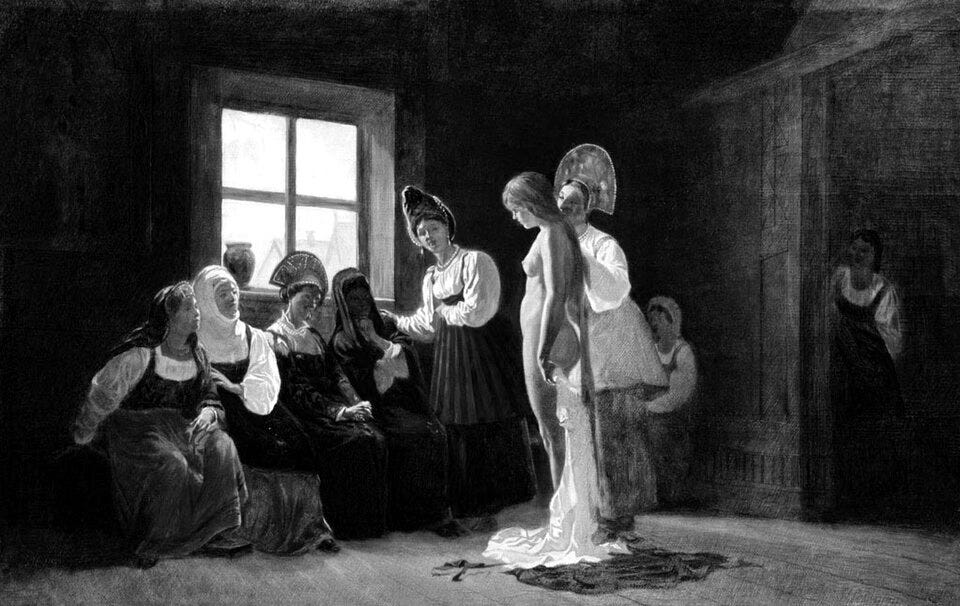
Pic. G. G. Myasoedov, Presentation of a Marriageable Girl. Serfdom was not just an economic condition. It turned private life into a permission system: land, work, movement, marriage and legal recourse were all shaped by power above you. (source)
Serfdom varied across Europe, but the basic pattern was clear enough: obligations such as labour, rents and dues were tied to land and landlord. The majority produced the surplus. The people above them extracted part of it.2
That is the starting point. Capitalism matters only if we first understand what came before it: a world where economic life was shaped less by open opportunity and more by personal power.
2. Permission Protected Extraction
Personal power became a permission system. You did not simply decide to leave, trade, learn a craft, open a workshop, borrow money or sell to a wider market. Someone often had to allow it.
In the countryside, the gatekeeper could be the landlord. In the town, it could be the guild. In trade, it could be a ruler granting a charter or monopoly. In social life, church authority and inherited status often gave the whole system a moral language. Hierarchy was sold as order. Privilege was sold as tradition. Exclusion was sold as quality control.
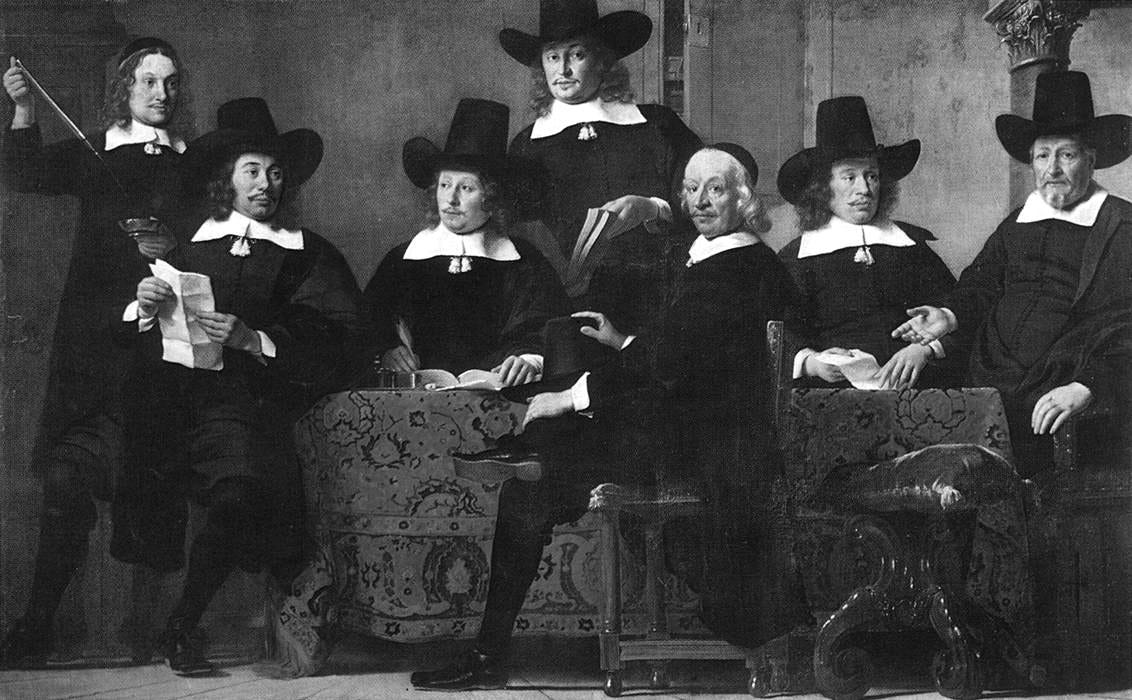
Pic. Rembrandt, The Sampling Officials of the Amsterdam Drapers’ Guild (1662). Quality control, market access and insider protection — all handled by the same calm gentlemen in hats. Very efficient, provided you were male and already in the room. (source)
Guilds are a good example because they were not only bad. They trained people, protected standards and gave members security. But they also restricted entry and protected insiders. Sheilagh Ogilvie’s work shows that guilds often excluded outsiders, women and competitors, and helped members secure rents.3
This is the key idea: the old system did not mainly fail because people lacked talent. It failed because access was controlled. The mass of people were too often treated as labour, tax base, tenants, believers, soldiers, customers of monopoly — in short, as resources for the people already holding power.
Capitalism begins to matter when this permission system starts to crack.
3. Property Turned Dependence Into Agency
The first big break was property.
Property is often misunderstood as “owning stuff”. That is too shallow. Property means recognised control. It means the right to use an asset, improve it, rent it, sell it, pass it on, borrow against it or risk it.
The Stanford Encyclopedia of Philosophy defines property as rules governing access to and control of resources. That matters. Property is not just a thing. It is a decision right.4
If your control over land, tools, inventory, a workshop or later shares in a company is legally recognised, you can plan. You can invest. You can improve. You can take risk. You are less dependent on the mood, favour or permission of someone above you.
Pic. Elon Musk’s uninsured McLaren F1 after its 2000 Sand Hill Road “risk assessment”. Property gives you control: you can use it, improve it, borrow against it — and, occasionally, launch it into an embankment. Agency is useful. Insurance also has its moments. (source)
This did not make everyone free overnight. Many people still had no property. Many owners abused power. But the principle changed: economic agency could now be anchored in rights, not only in status.
That is why property became one of capitalism’s core foundations. It moved the question from “Will someone powerful allow me?” to “What can I do with what I control?”
B O X
Women: The Deepest Permission System
For women, the old permission system often went even deeper. Many were not only dependent on lord, church, guild or family status. They were also legally and economically dependent on men.
In English common law, the doctrine of coverture meant a married woman’s legal identity was largely absorbed into her husband’s. Control over earnings and property had to be won back through legal reforms in the 19th century.
Capitalism did not automatically solve this. Early factories also exploited women and children. But the capitalist tools mattered: property rights, contracts, wages, education, firms and markets gave women more ways to earn, leave, own, organise and build independent lives.
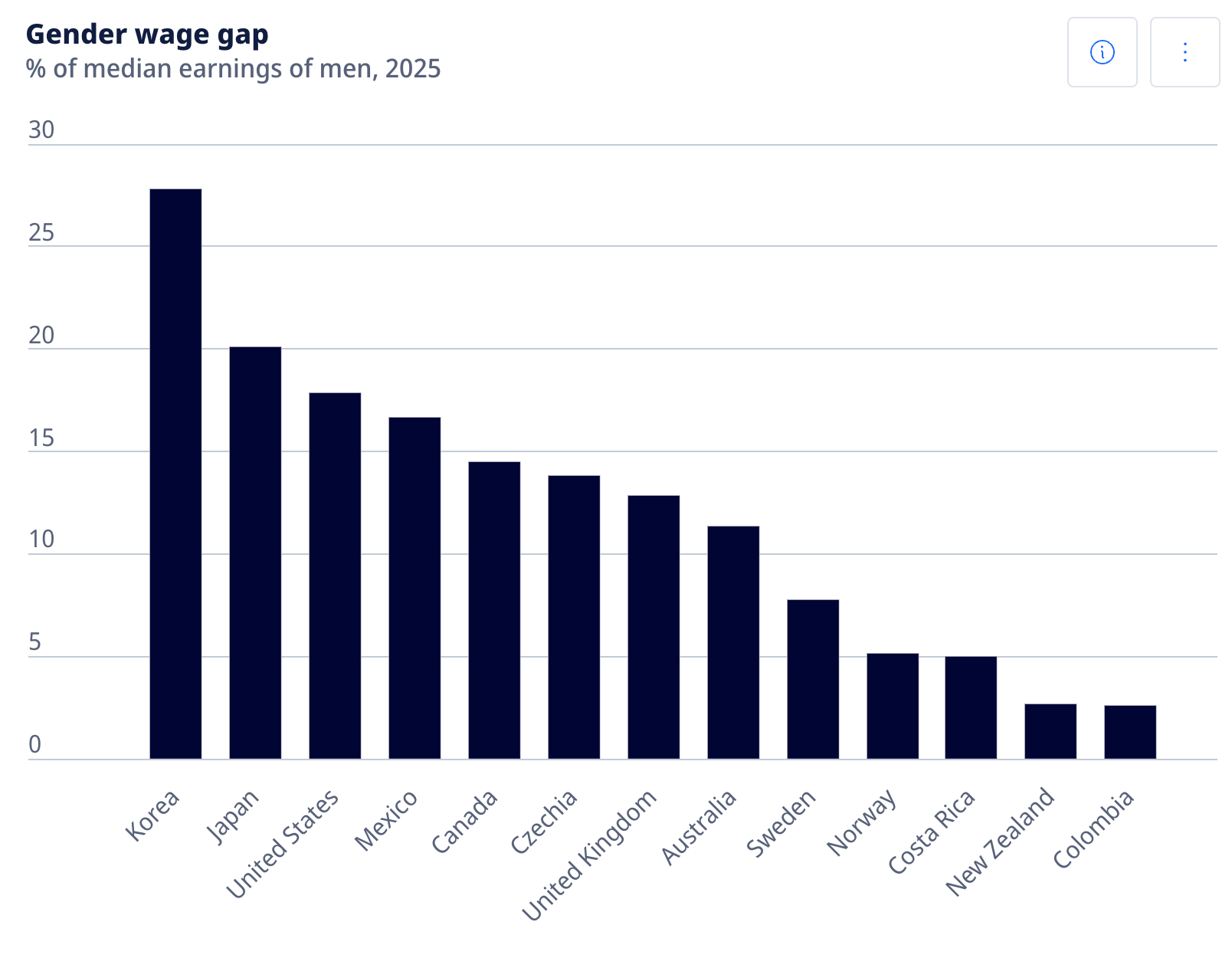
That fight is not finished. The gender wage gap still exists across OECD countries. But the direction is clear: equal opportunity requires more than good intentions. It requires rights, access, capital, education and real exit options.5
4. Contracts Made Strangers Useful
Property gives you control. Contracts let you cooperate.
In the old world, trust was often personal. You trusted family, village, guild, church, lord or patron. That kind of trust works in small circles. It does not easily build large markets.
Contracts changed the scale of cooperation. A buyer could promise payment. A seller could promise delivery. A lender could demand repayment. A worker could sell labour. A merchant could insure a shipment. The relationship no longer had to depend only on personal loyalty or local hierarchy.
This is one of the hidden freedoms of capitalism. It made strangers economically useful to each other. You no longer had to belong to the same family, town, guild or church to cooperate.
The World Bank has put the point plainly in its work on contract enforcement: efficient contract enforcement is essential to economic development and sustained growth, because it supports rule of law, rights protection, credit markets and firm growth.6
This is how economic life starts moving from personal favour to impersonal rules. That sounds boring. It is not. It is one of the ways ordinary people stop being trapped inside someone else’s circle.
5. Credit Made The Future Investable
Property and contracts make trust possible. Credit turns that trust into action.
Credit means you do not need to already have all the money before you start. A trader can finance cargo before selling it. A workshop can buy better tools before profits arrive. A factory can buy machines before output is produced. A founder can build for future revenue, not only from yesterday’s savings.
That changes time. In a pure subsistence world, you mostly live from today’s output. With credit, the future becomes something you can invest in today.7
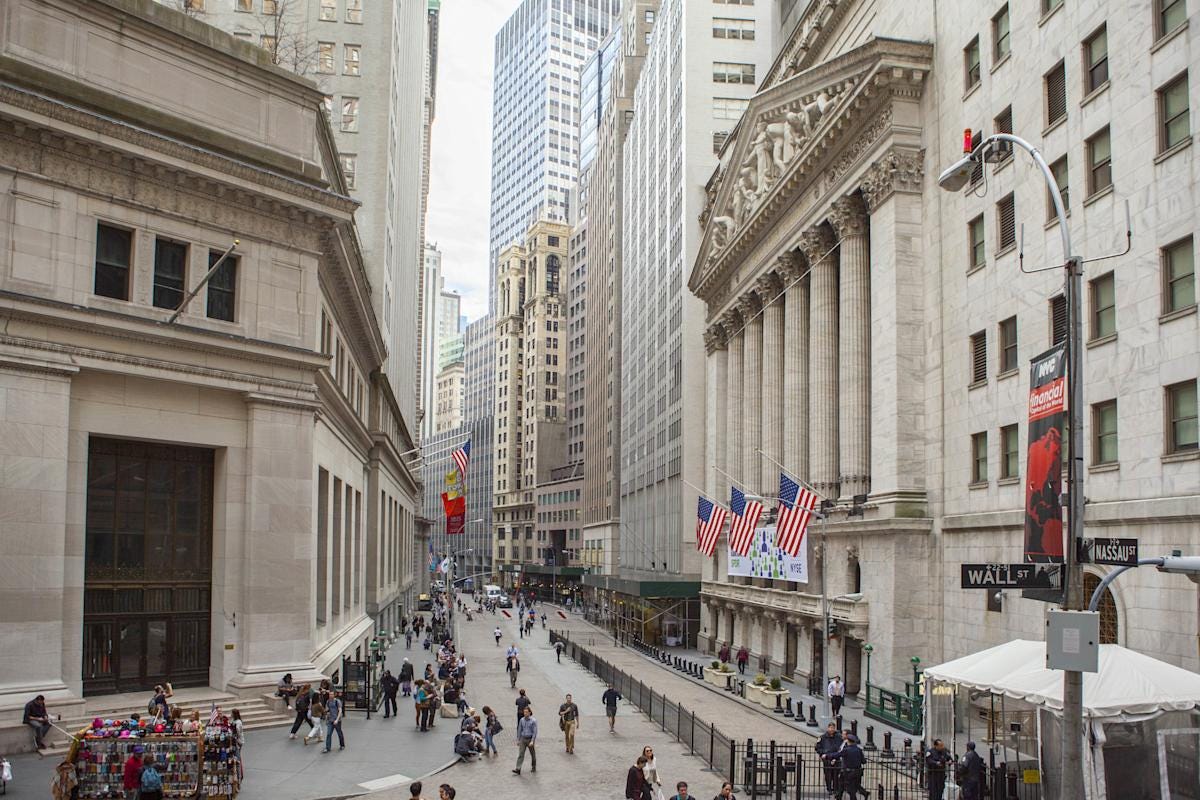
Pic. Wall Street. Credit turns trust into action: useful when it funds ships, factories and companies; less charming when everyone forgets the brakes. (source)
This is powerful, but also dangerous. Credit can build ships, factories and companies. It can also create bubbles, debt traps and speculation. Capitalism is not clean. Its instruments can create growth or disaster, depending on rules, incentives and judgement.
But the core point remains: credit weakens the old dependency on inherited wealth. You no longer need to be born with all the capital. A credible plan, a contract and collateral can sometimes unlock resources before success already exists.
That is why credit is not a banking detail. It is a liberation mechanism. It lets ambition move earlier.8
6. Companies Scaled Human Ambition
A family can run a farm or a shop. Larger projects need more structure.
A ship, railway, factory, bank, semiconductor company or software platform cannot be built by one person with a toolbox and good intentions. It needs capital, labour, contracts, accounting, risk-sharing and management.
The company became the structure that made this possible. It allowed many people to work around one project. It allowed investors to share risk and upside. It allowed activity to continue beyond the life, strength or savings of one individual.
The history is messy. Early joint-stock companies were often tied to state charters, monopolies and empire. They were not pure free-market angels. The English East India Company and Dutch East India Company show both sides: scalable enterprise and enormous political power. Still, the organisational invention mattered. It showed that capital, people and risk could be pooled at a new scale.9
This matters for the story because capitalism is not only about individuals. It is also about institutions that let human ambition scale beyond family, village and local permission.
7. Markets Replaced Gatekeepers With Customers
Once people can own, contract, borrow and organise companies, the next question is simple: who decides whether what they build matters?
In the old permission system, gatekeepers decided. The guild master. The landlord. The ruler. The charter. The local monopoly. The insider circle.
Markets changed the judge. In a market, customers decide by buying or not buying. Competitors attack you by offering something better, cheaper, faster or more useful. Prices give feedback. Profit and loss tell you whether resources are being used well or badly.
This is harsh. A customer can leave you. A competitor can destroy your margin. A market can punish your mistake. Capitalism is not kind in that sense.
But it is less arbitrary than gatekeeper power. The mayor’s cousin may still get the licence in a corrupt system. But in a functioning market, usefulness has a fighting chance. That is a major civilisational improvement.
Markets did not end unfairness. But they shifted more judgement from status to value created for others.
8. Specialisation Turned Freedom Into Productivity
Freedom alone does not make a society rich. People must become more productive.
This is where Adam Smith fits. In The Wealth of Nations, his famous pin-factory example shows that output rises when work is divided. One person doing every step alone produces very little. Many people specialising in different steps, using better tools and repeatable processes, produce far more.
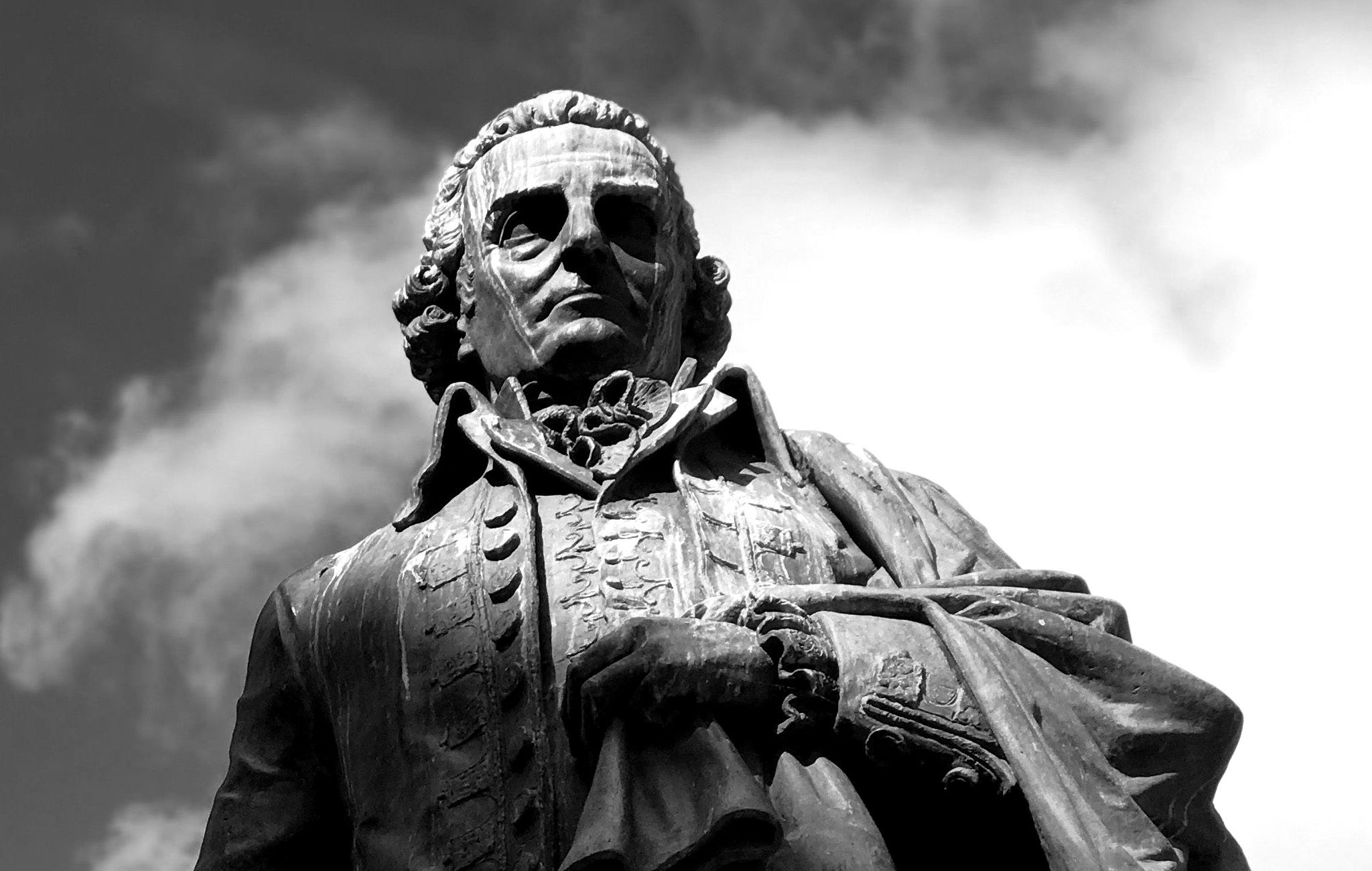
Pic. Adam Smith. The pin factory was not about pins. It was about why doing one thing well beats everyone pretending to be good at everything. (source)
Smith’s point was not really about pins. It was about the productive power of specialisation.10
Capitalism allowed millions of people to specialise and exchange with one another. A farmer did not have to make his own shoes, tools and clothes. A machinist did not have to grow his own wheat. A software engineer does not have to build her own laptop, payment system, office chair and coffee machine. Thankfully. The coffee machine alone would finish most startups.
This is the conversion point: ownership, contracts, credit, companies and markets create freedom to act. Specialisation turns that freedom into productivity.
9. Discipline Made Growth Compound
Productivity creates surplus. But surplus can be wasted.
For growth to compound, societies need habits: saving, reinvestment, literacy, accounting, punctuality, trust, restraint and long time horizons. This is where Max Weber matters.
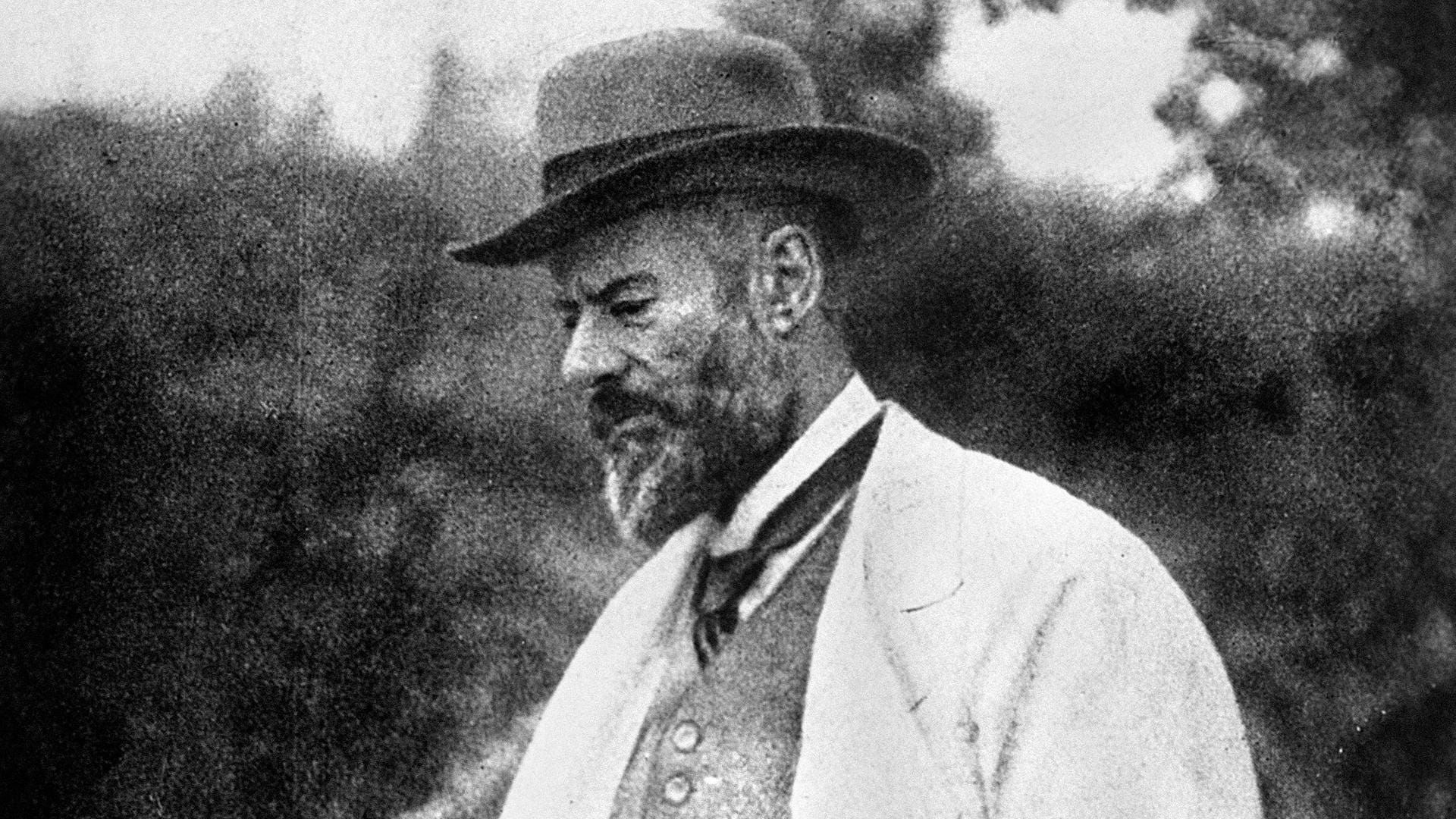
Pic. Max Weber. Growth also needed habits: work seriously, save something, keep records, reinvest. Wild stuff, apparently. (source)
Weber’s idea of innerweltliche Askese — inner-worldly asceticism — describes discipline inside ordinary worldly life. Work seriously. Waste little. Save. Reinvest. Treat work as a calling, not only as survival.11
But we should not turn Weber into a lazy religious scoreboard. The story is not “Protestants good, Catholics bad”. Becker and Woessmann tested the Weber thesis in historical Prussia and found that Protestant regions were economically more advanced, but argued the stronger mechanism may have been literacy and human capital from Bible reading, not some mystical Protestant superiority.12
That nuance is important. Capitalism needs culture, but culture works through concrete things: education, trust, calculation, habits, skills and institutions. Compounding is not magic. It is disciplined surplus plus time.
10. The Growth Break Changed Ordinary Life
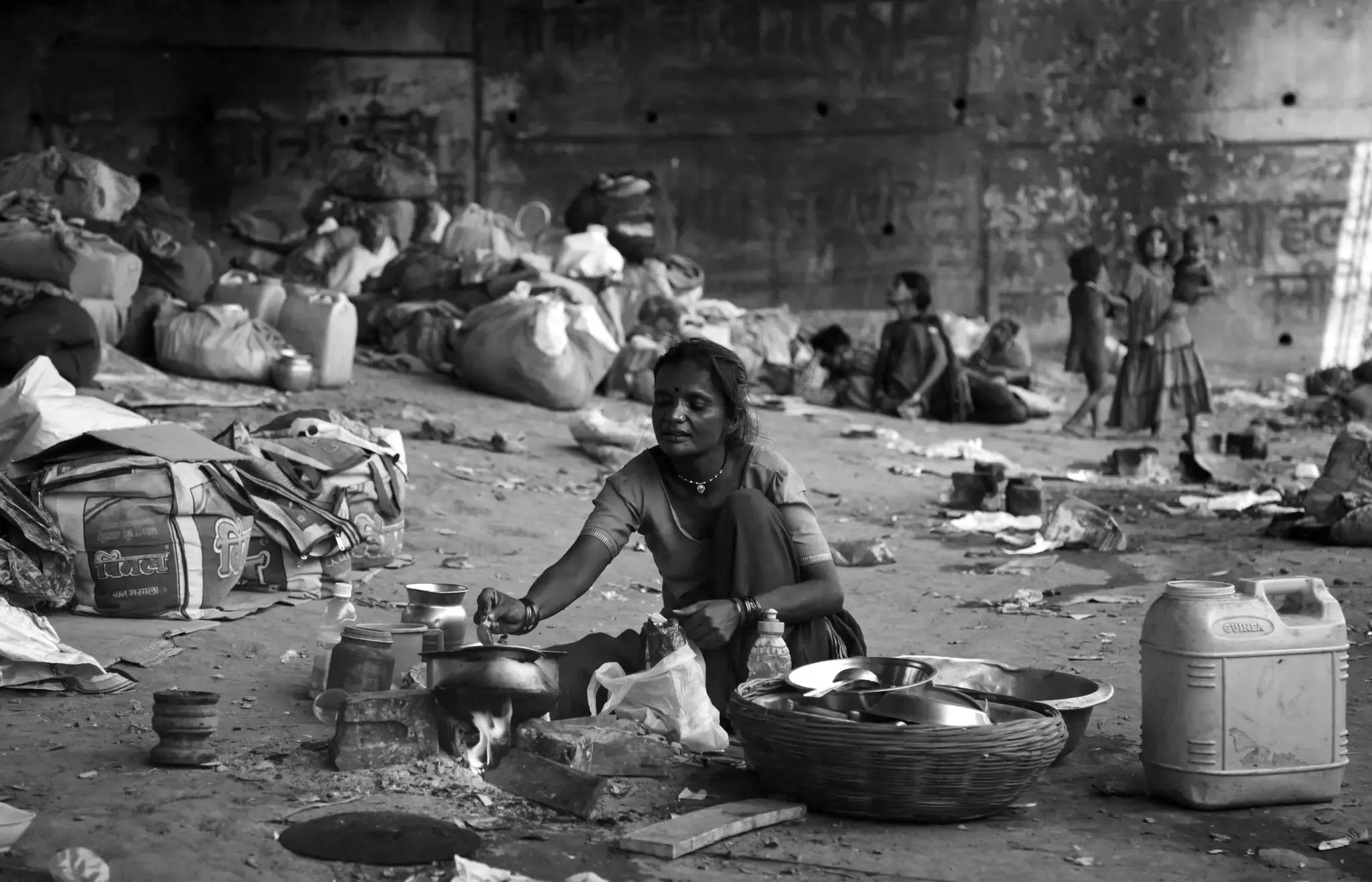
For most of human history, poverty was normal. Not relative poverty. Absolute poverty. Little surplus. Little mobility. High exposure to bad harvests, disease, war and local abuse.
Pic. Extreme poverty was the historical default. Modern growth did not make life perfect, but it changed the odds for hundreds of millions. (source)
Then modern growth changed the curve. The Maddison Project Database tracks comparative economic growth and income levels over the very long run. The big picture is clear: average incomes moved slowly for centuries, then modern economic growth changed the slope.13
The same logic appears in poverty data. The World Bank says the number of people living in extreme poverty fell from around 2.3 billion in 1990 to 831 million in 2025, largely driven by broad-based growth in East Asia and South Asia.14
This was not capitalism alone waving a magic wand. Growth also needed public health, education, infrastructure, state capacity, trade, technology and political stability. But the hard fact remains: redistribution can reduce suffering within a given level of output. It cannot replace the creation of output.
Capitalism’s great historical achievement was that it connected rights, markets, capital, organisation and productivity into a system that could create surplus at scale.
11. Capitalism Helped Turn Subjects Into Citizens
This is the democratic landing.
If the ruler controls your land, job, licence, capital, housing, prices and permission to trade, your political freedom is thin. You may have a voice. You may even have a vote. But your practical life still depends on power above you.
Capitalism changed that by creating independent economic power outside the state. Owners, founders, family businesses, workers with exit options, investors, publishers, associations, universities, unions, foundations and middle classes all create centres of power that are not fully controlled by the ruler.
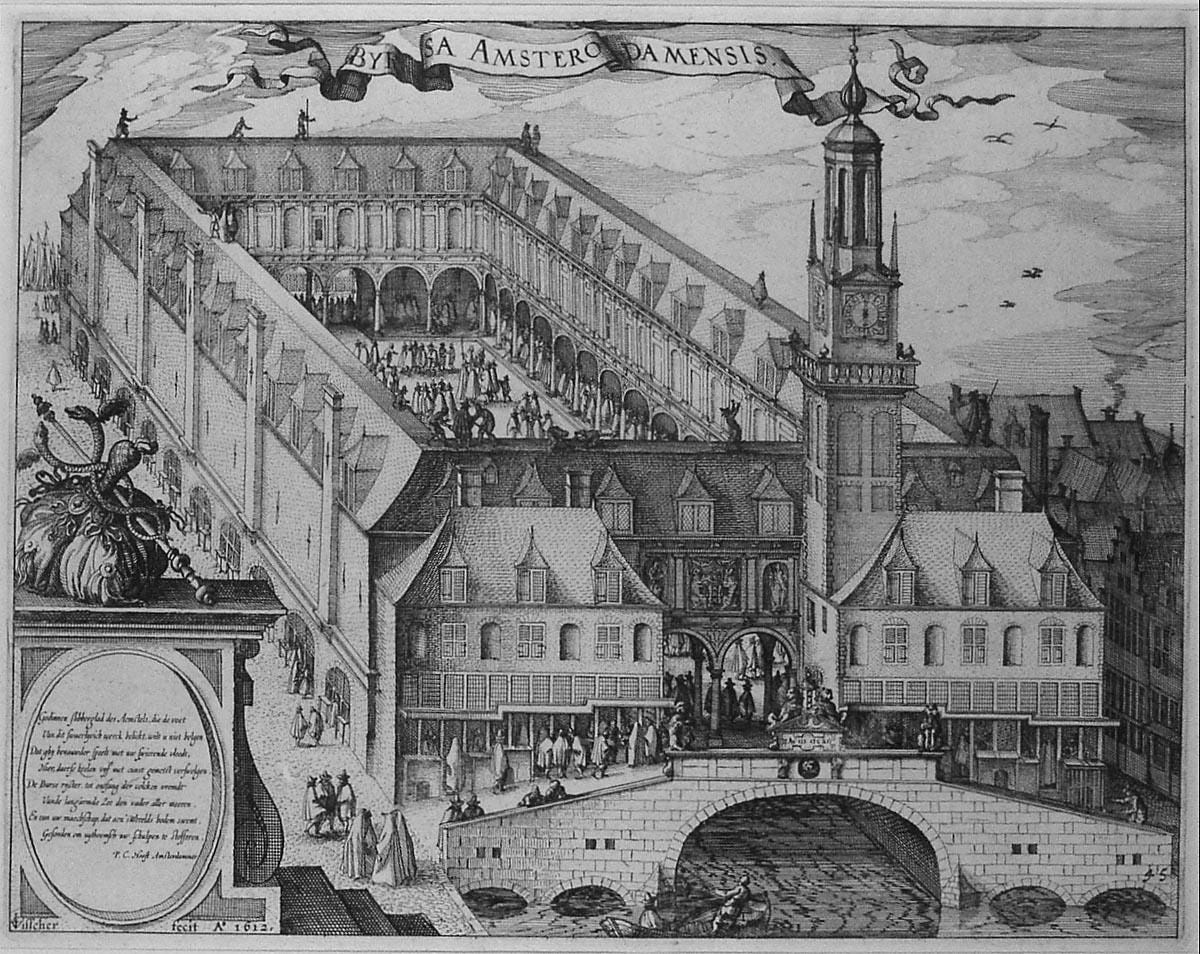
Pic. Amsterdam Stock Exchange, early 17th century. Capitalism did not begin as a slogan. It began as infrastructure: a place where strangers could meet, price risk, finance trade and make the future investable. (source)
This does not automatically create democracy. China proves that. Capitalism can exist with authoritarian politics. And democracy can regulate capitalism heavily without becoming socialist. We need to be precise here.
But liberal democracy is much harder without capitalism, because liberal democracy needs citizens who are not only subjects. It needs people who can own, build, contract, leave, publish, invest, employ, donate, compete and organise outside state permission.
That is what capitalism actually freed: not humanity from all injustice, not workers from all exploitation, not society from all hierarchy. It freed economic life from being mainly a personal permission system. It helped move society from power and extraction toward rights, exit, cooperation, productivity, surplus and independent citizens.
🎚️🎚️🎚️🎚️ Producer’s Note
This piece is about capitalism before it became a political insult.
At its core, capitalism moved people from permission to ownership, from dependence to options.
So yes, 50 Cent works here. Not subtle. But neither is the point: Without rights, capital, credit and exit, freedom often stays theoretical.
Still: Money does not make you happy. But it improves your options — and your country’s.
StudioAlpha Capital is a Delaware-structured pre-seed venture fund backing AI-native B2B software startups at day zero. Legal counsel: Cooley LLP. Fund administration: AngelList.