🕌 Trillions, Teraflops & Ties: How America’s AI Blitz in the Gulf Rewires the World Order”
Record-size datacentres in Abu Dhabi, the U.S. is locking in decades of AI dominance while China plays pragmatist and Europe debates plastic bottle caps.
This week, the U.S. Senate debates the landmark economic bill, shaking up bond markets as investors brace for potential changes in long-term interest rates. But: it’s never about short-term swings—it’s about the long-term horizon.1
Just look at what’s unfolding right now: Google’s massive AI infrastructure investments announced last week, coupled with the unprecedented multi-trillion-dollar AI partnerships between the U.S. and UAE, Saudi Arabia, and Qatar. These historic moves mark the single biggest wave of investment ever, presenting unparalleled opportunities for startups and forward-looking investors.2
Here’s why this matters—and what it means for you.
Loading...
Background: Moving Away from Restrictive Policies
Under the Biden administration, stringent export controls severely restricted allies’ access to advanced semiconductors, notably GPUs from companies like Nvidia and AMD, essential components for AI development. These limitations created a divided world—countries with access to cutting-edge technology and those forced to lag behind.
The recent reversal by the Trump administration has reopened these critical AI resources to American allies, significantly enhancing global cooperation and fortifying America’s position at the forefront of technological innovation.3
Core Strategic Components of Middle East AI Agreements
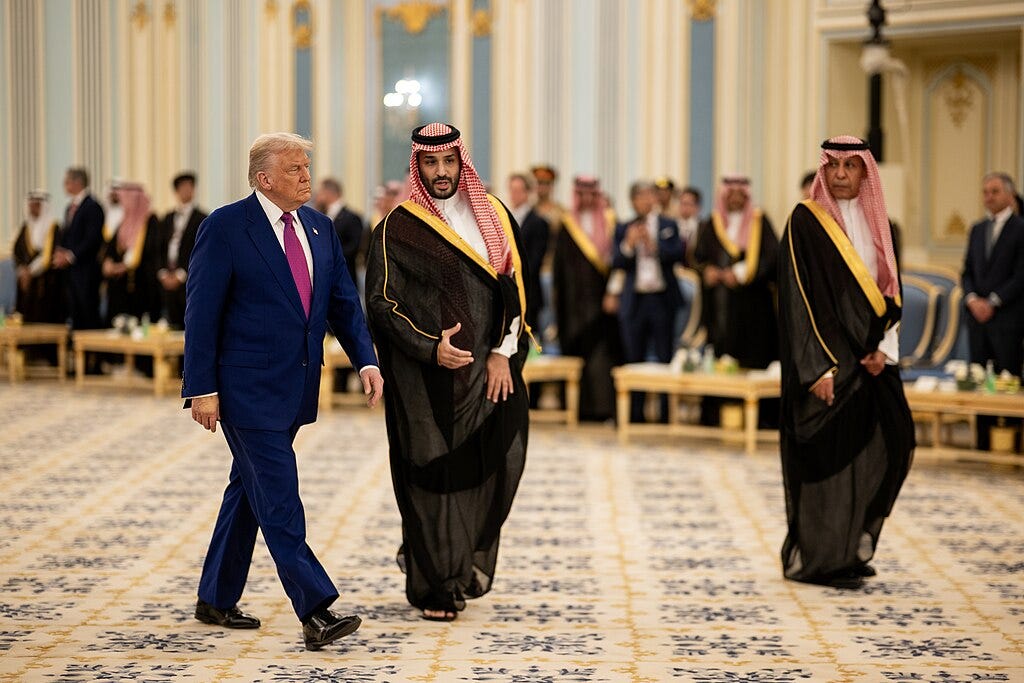
Pic. Trump in Saudi Arabia with Mohammed bin Salman (source)
The recent agreements established between the U.S. and Middle Eastern countries revolve around three essential components:
1. Reciprocal Infrastructure Investments (America First Strategy)
Every data center built in countries like Saudi Arabia, UAE, or Qatar is matched by equivalent investment into U.S.-based AI infrastructure. For example, the UAE recently announced a major AI campus development in Abu Dhabi with a staggering 5-gigawatt capacity—equivalent to powering around 2.5 million GPUs. An equal commitment to infrastructure is mirrored within the U.S. itself.4
To visualize this scale, consider that ChatGPT’s original version ran on around 10,000 GPUs. The new UAE facility alone represents a compute capacity 250 times larger, creating a massive leap forward in AI research and commercial deployment.
2. Dominance by U.S. Tech Giants
The operational control of these facilities is firmly held by American tech giants such as Nvidia, Oracle, OpenAI, Cisco, and Microsoft. This arrangement significantly expands American businesses’ global market reach. Practically, it means companies building software or AI services in Silicon Valley now have seamless access to vast new markets in the Gulf region.5
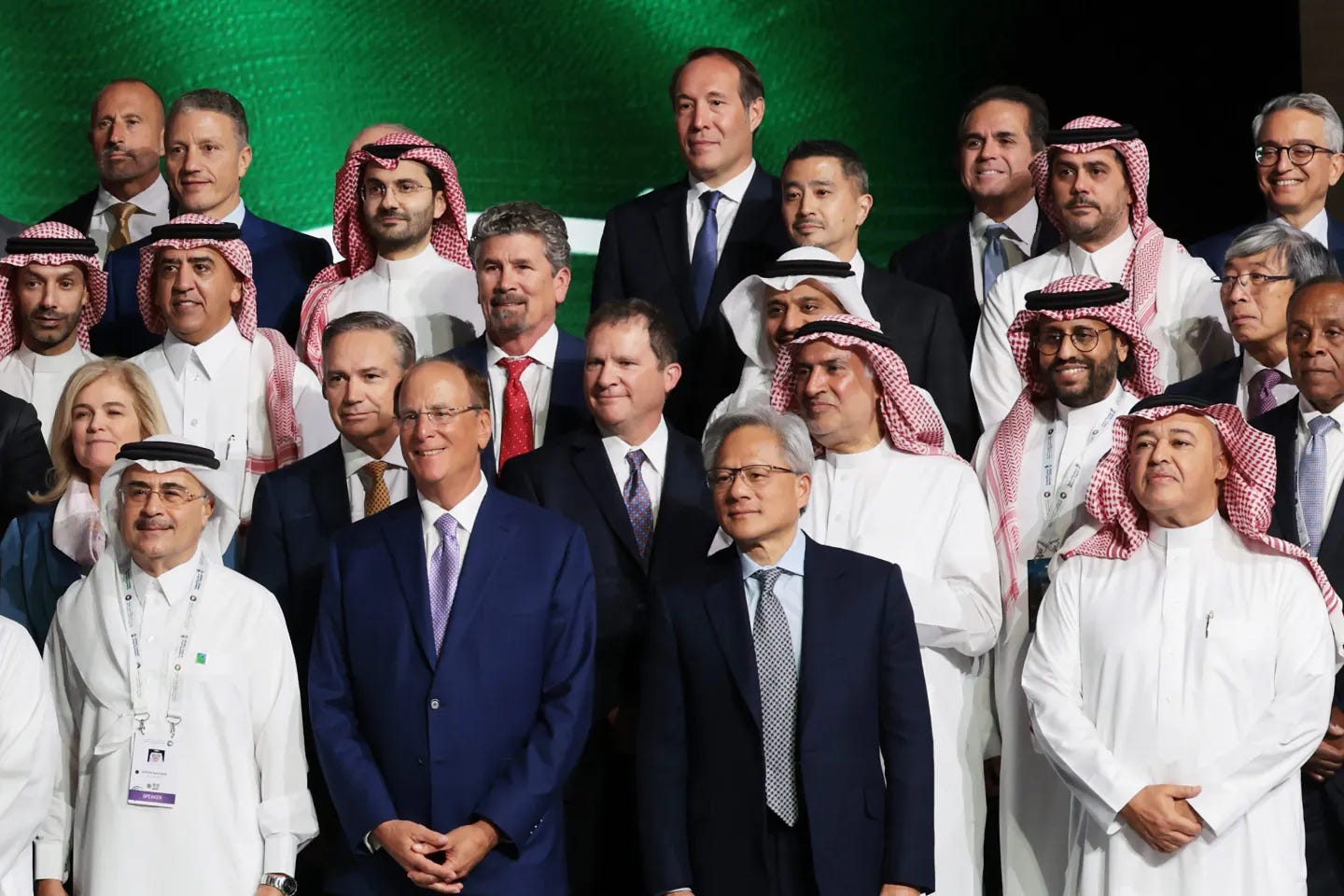
Pic. Jensen Huang trading the black leather jacket for boardroom chic (source)
A real-world analogy would be Apple’s global strategy. Just as Apple dominates smartphone markets by controlling the app ecosystem and hardware, the U.S. now similarly aims to dominate global AI infrastructure through its control of GPU hardware and AI platforms.
3. Rigorous Security Protocols
Recognizing the dual-use nature of GPUs—useful for both peaceful AI innovation and potentially harmful applications—strict safeguards have been enacted. These ensure GPUs cannot be diverted to adversaries or misused for unauthorized activities. Similar to safeguards on military-grade encryption technology, this move signals the U.S. government’s commitment to responsibly managing powerful technologies.6
Why the Middle East? A Strategic Decision Explained
Several strategic advantages make the Middle East the ideal partner for U.S. AI diplomacy:
Geopolitical Significance
The Middle East is home to crucial U.S. military installations, notably Qatar’s Al Udeid Air Base—the largest American air base in the region, housing over 10,000 U.S. personnel.7 This military presence reinforces America’s strategic interests, complementing its technology diplomacy.
Demographic Reach: Access to Half the World’s Population
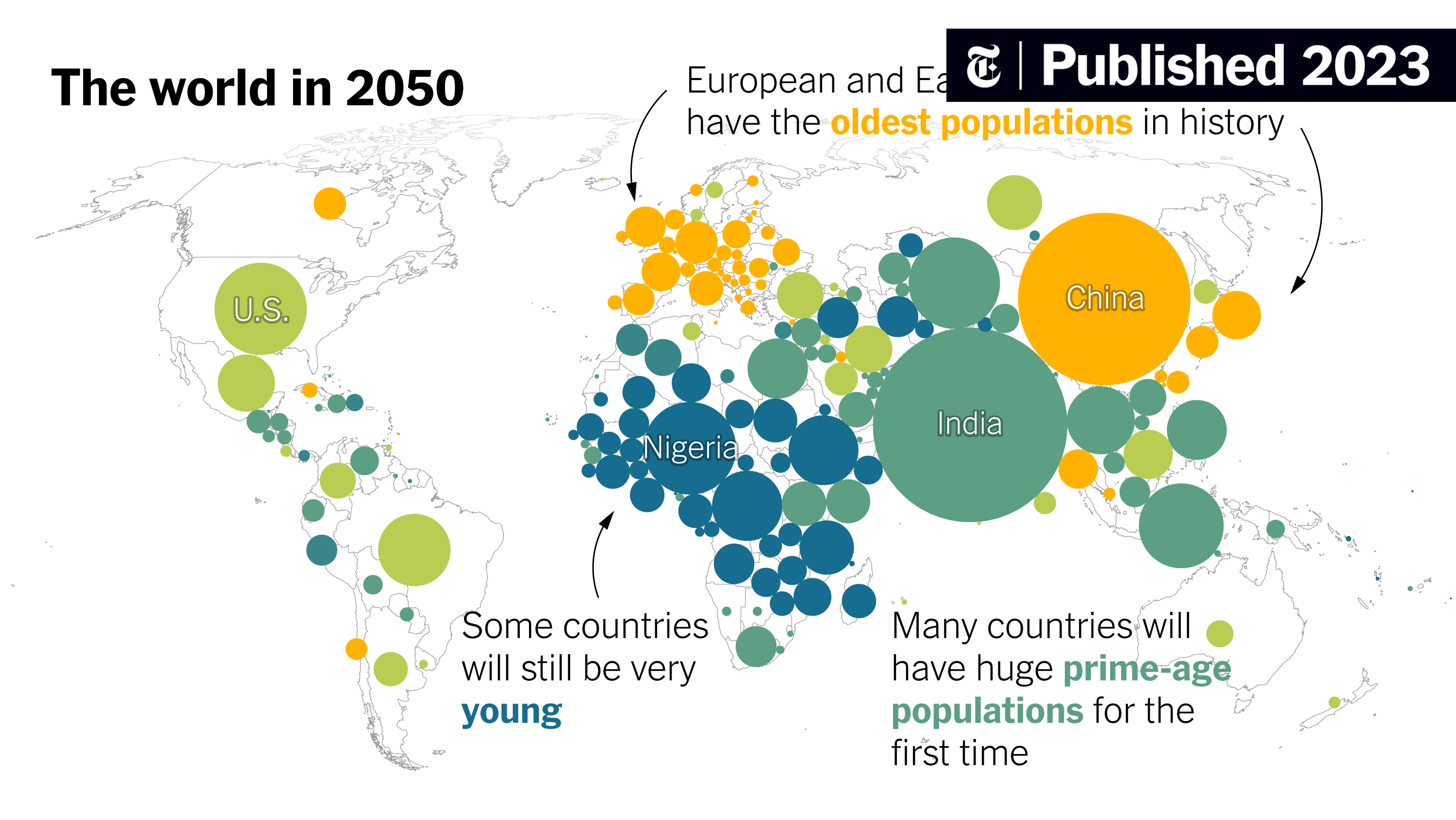
Remarkably, within approximately a 1,000-mile radius of the Gulf states, the market reaches over four billion people—about half the global population. By situating AI hubs in this strategic location, the U.S. ensures American tech services become indispensable across markets including India, East Africa, Europe, and Central Asia. Further more, the region serves as the gateway to access two-thirds of the whole global population accordingly to RA Group.8
Think about Amazon’s data centers located strategically near major markets to minimize latency; similarly, these AI facilities will ensure optimal service and reliability to billions of users, enhancing user experiences for applications like cloud computing, autonomous vehicles, and healthcare AI.
Resource and Energy Richness
Energy costs significantly affect AI infrastructure profitability, as large-scale AI systems demand massive electricity resources. The Middle East, rich in solar power, nuclear, and natural gas, offers significantly cheaper electricity, lowering operating costs for AI facilities.9
For context, Google spends billions annually on electricity for data centers; the Gulf region’s inexpensive energy directly translates into billions of dollars saved, bolstering profit margins and competitive pricing.
By rapidly shifting to an open model, the U.S. counteracts China’s expanding influence, ensuring American technologies become global standards.
For example, consider how Android became the global smartphone standard—open, widespread adoption created dominance. Similarly, American AI infrastructure, being broadly accessible, is now poised to achieve global ubiquity.
🇨🇳 Talking About China: Pragmatism Over Moonshots
Pic. China’s AI strategy all about serving the state (Source)
As the U.S. focuses on massive investments and futuristic AI breakthroughs, China is quietly taking a different path—practical, immediate AI applications rather than abstract moonshots. Instead of competing head-on with America’s trillion-dollar infrastructure race, China prioritizes affordable, everyday use-cases of AI in manufacturing, commerce, and consumer products, building broad adoption fast.
This pragmatic approach mirrors China’s past tech success—think Alibaba’s e-commerce dominance or WeChat’s omnipresent payments. By embedding AI into daily life quickly and cheaply, China hopes to quietly establish an ecosystem that, once in place, is hard for others to dislodge.
The contrast is clear: America invests trillions seeking global tech dominance through big infrastructure. China, meanwhile, quietly integrates AI everywhere. Startups and investors shouldn’t overlook this pragmatic alternative—because ubiquity and practical adoption might just outlast even the biggest infrastructure bets.11
Economic and Market Impact
The economic impact of these agreements is substantial:
Saudi Arabia, Qatar, and the UAE pledged reciprocal investments totaling trillions of dollars in American tech infrastructure.
Major AI campuses, like the one in Abu Dhabi, are expected to stimulate massive economic activity, with ripple effects across the U.S. tech industry.12
Imagine the economic boom that occurred around Seattle due to Amazon and Microsoft’s headquarters—these massive infrastructure investments will similarly drive regional economic revitalization across numerous U.S. locations.
🇪🇺 And what’s EU doing?
As the U.S. solidifies AI alliances in the Gulf and China aggressively pushes ahead, Europe remains busy perfecting its bureaucracy. While Silicon Valley deploys millions of GPUs, the EU proudly mandates…plastic caps tethered to drink bottles. Europe’s sluggish decision-making, overregulation, and aversion to risk ensure the continent stays comfortably irrelevant in the global AI race. If there were medals for self-inflicted tech stagnation, Europe would unquestionably win gold.
Pic. found on Marc Andreessen’s X account
This openness mirrors America’s successful strategy with the internet. Gurley described this strategy with a vivid analogy: imagine if in 2000, the U.S. had prevented Google from operating globally.13 Such restriction would have severely limited America’s tech dominance. The new strategy framework ensures AI follows Google’s path, boosting America’s technological and economic strength globally.14
Future Outlook and Policy Goals
Looking ahead, the administration’s AI policy revolves around:
Encouraging rapid technological innovation and maintaining global AI dominance.
Accelerating U.S. infrastructure development, eliminating bureaucracy and red tape.
Expanding AI diplomacy by strengthening partnerships worldwide, particularly in strategic markets.
We see an extraordinary growth of AI as surpassing even the internet revolution in scale. Adopting open diffusion now secures America’s central role in this transformative wave.15
🚀 Founders, This Is Your Moment: The $3.2 Trillion AI Opportunity
If you’re a startup founder, student, or aspiring entrepreneur, the global AI boom isn’t just a headline—it’s your once-in-a-generation launchpad. The convergence of massive investments, strategic partnerships, and technological advancements has created an environment ripe for innovation and success.
💰 $3.2 Trillion in Strategic Investments
Recent geopolitical shifts have led to staggering investment commitments:
United Arab Emirates (UAE): A 10-year, $1.4 trillion investment framework in the U.S., focusing on AI infrastructure, semiconductors, energy, and manufacturing.
Saudi Arabia: A $600 billion pledge over four years, encompassing AI data centers, energy infrastructure, and technology sectors.
Qatar: An economic exchange commitment worth at least $1.2 trillion, including a $500 billion investment in the U.S. economy over the next decade.
These investments are not abstract figures; they translate into tangible projects, partnerships, and opportunities for startups and innovators worldwide.
🌍 A Global AI Infrastructure Boom
The UAE is constructing the world’s largest AI campus outside the U.S., a 10-square-mile facility in Abu Dhabi powered by 5 gigawatts and operated by U.S. companies. This initiative includes importing up to 500,000 of Nvidia’s top AI chips annually starting in 2025.
In the U.S., Saudi Arabian firm DataVolt plans to invest $20 billion in AI data centers and energy infrastructure, further solidifying the U.S. as a global AI hub.
🚀 Opportunities for Startups and Innovators
This influx of capital and infrastructure development opens doors for startups in various sectors:
AI and Machine Learning: Develop applications leveraging the new infrastructure.
Energy Tech: Innovate in energy solutions to support data center demands.
Semiconductors: Engage in the design and development of next-generation chips.
Cloud Services: Offer specialized services tailored to the burgeoning AI infrastructure.
The strategic partnerships between Middle Eastern nations and U.S. tech giants create a fertile ground for startups to thrive, with access to funding, infrastructure, and markets.
🎓 For Students and Aspiring Founders
If you’re a student or aspiring entrepreneur, now is the time to act:
Skill Development: Focus on AI, data science, and related fields.
Networking: Engage with incubators and accelerators that are part of this global expansion.
Entrepreneurship: Leverage the available resources to launch startups that can integrate into this rapidly evolving ecosystem.
This is more than a career opportunity; it’s a chance to be at the forefront of a technological revolution that is reshaping industries and economies.
🔑 Seize the Moment
The alignment of massive investments, technological advancements, and strategic partnerships has created an unparalleled environment for innovation. Whether you’re aiming for financial success, independence, or to make a meaningful impact, the time to act is now.
The U.S. AI pivot toward strategic openness, exemplified by groundbreaking partnerships in the Middle East, cements America’s global leadership in AI. By embracing collaboration, reciprocal investment, and stringent security measures, the U.S. creates a robust framework benefiting American technology companies, enhancing national security, and strategically aims to outflank Chinese influence.
This approach does more than establish short-term leadership—it strategically anchors America at the heart of the global AI infrastructure for decades to come, driving unparalleled economic growth and geopolitical stability … ideally through some form of collaboration with China.
If you like or think different, let me know via fabian@studioalpha.capital or leave a comment!