


Tomorrow, the World Cup starts.
For most people, that means football. Flags. Goals. Bad national anthems sung with full emotional commitment. One uncle who suddenly becomes a tactical expert after two beers.
It began in Uruguay in 1930. Now it arrives as a 48-team, 104-match, three-country spectacle across 16 North American cities.1
In the US, that alone is a strange story.
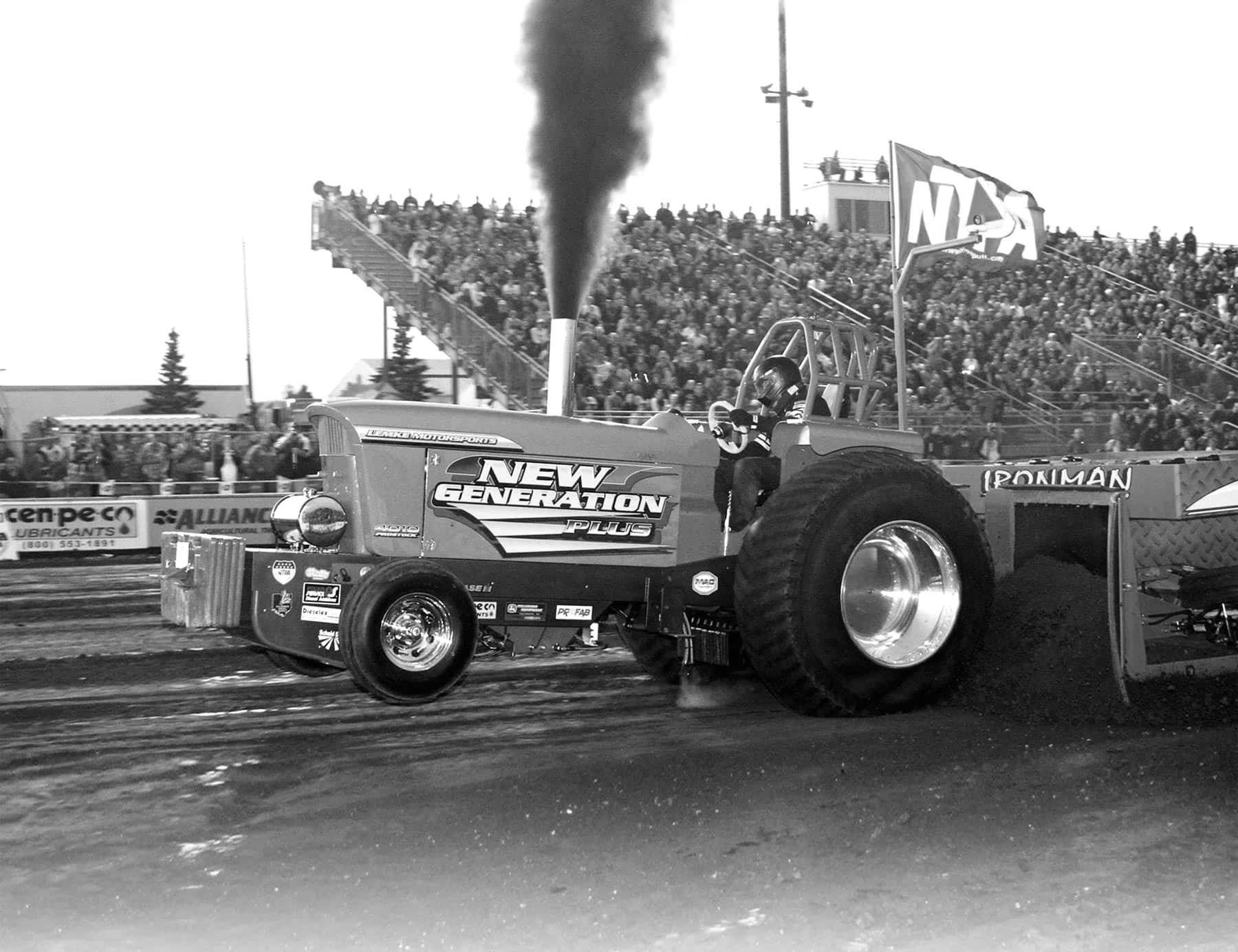
Not long ago, soccer was mocked as a foreign sport. When America hosted the 1994 World Cup, many still treated it like a temporary curiosity. Roger Bennett wrote in the Wall Street Journal that soccer once ranked below tractor-pulling in a US spectator-sport survey.
So what happened?
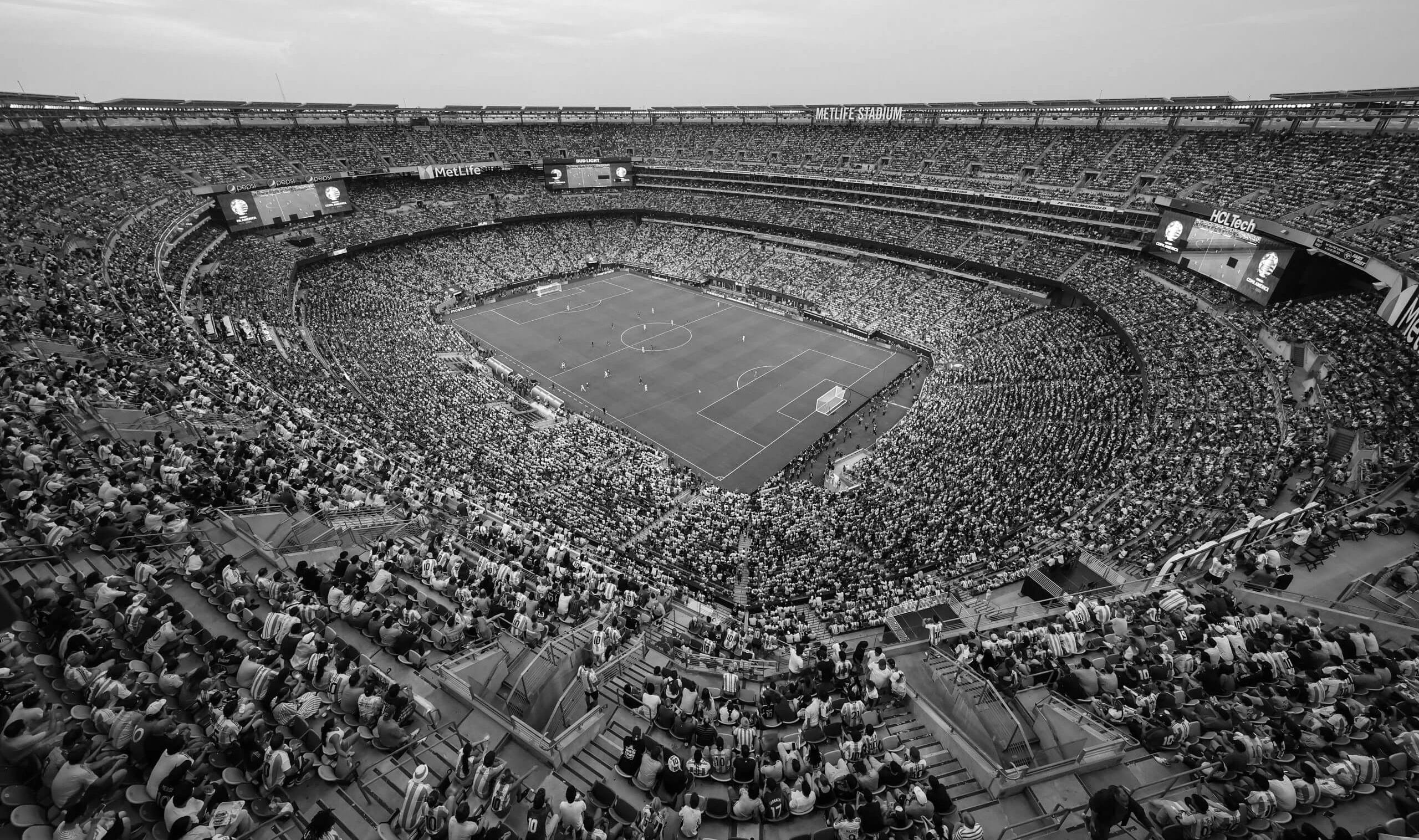
How did a sport America used to laugh at become big enough to fill stadiums, streaming platforms, sponsor decks, private-equity memos, and presidential photo ops?
And what exactly are we watching tomorrow: a football tournament, a media product, a political stage, or one of the largest attention machines on earth?

1) America finally joins the party
The funny part is that the main host country once treated football as a foreign hobby.
When the US hosted the 1994 World Cup, many Americans still saw soccer as strange, slow, and suspiciously European. Roger Bennett wrote in the Wall Street Journal that shortly after he moved from the UK to the US, soccer ranked 67th in a national survey of favourite spectator sports. Tractor-pulling ranked 66th.
That is hard to improve on as a cultural insult.2
But America changed.
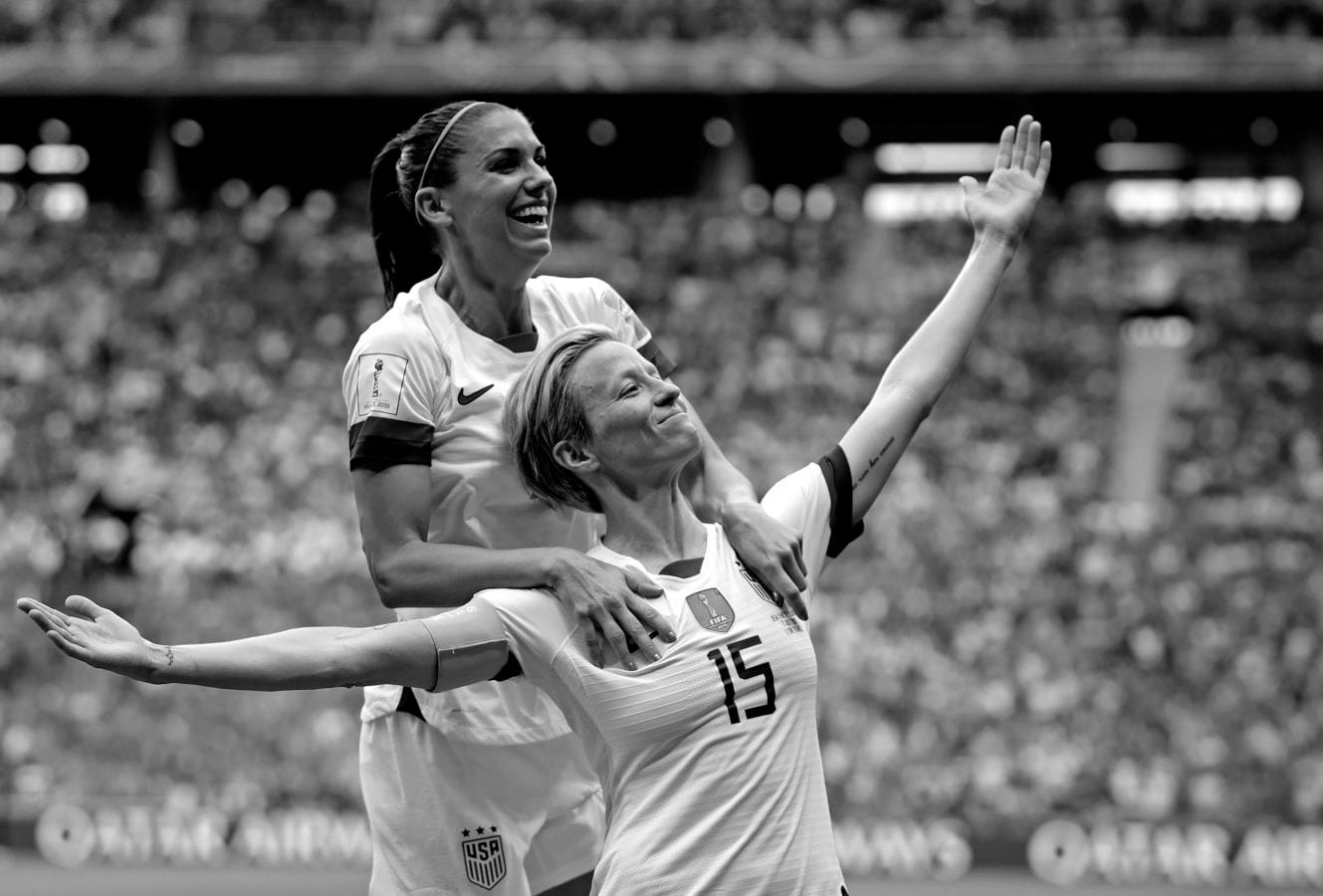
The internet made global football easier to follow. Streaming made Premier League matches available every weekend. Video games taught a generation the names of clubs, players, shirts, leagues, and derbies they had never seen in real life. The US women’s national team gave the country winners. Messi in Miami made football feel less foreign. Ted Lasso probably did more for the Premier League than some club marketing departments, which is annoying but true.
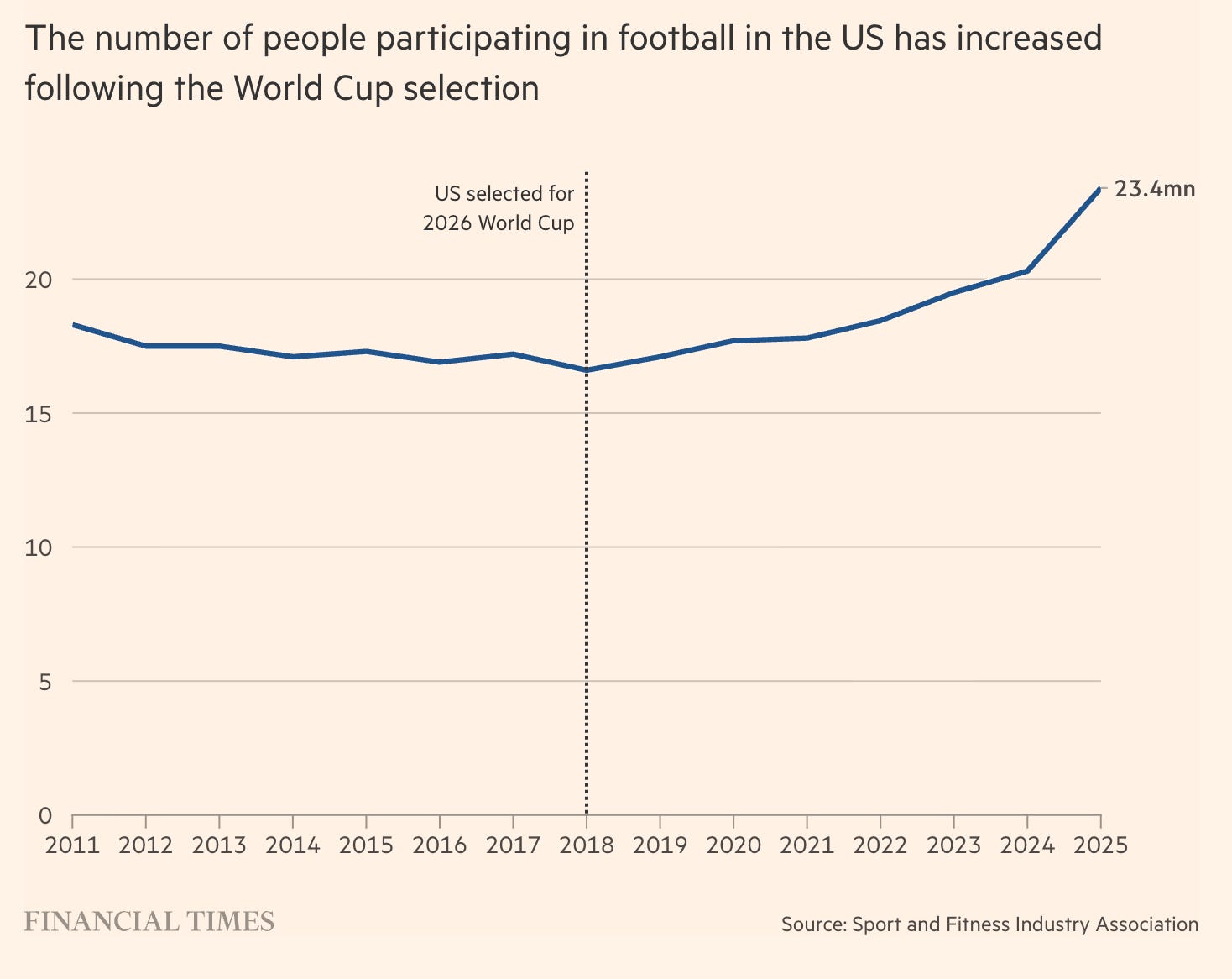
Now the tournament arrives in a different America.
The 2026 World Cup has 48 teams and 104 matches. It is the biggest tournament in FIFA history.3
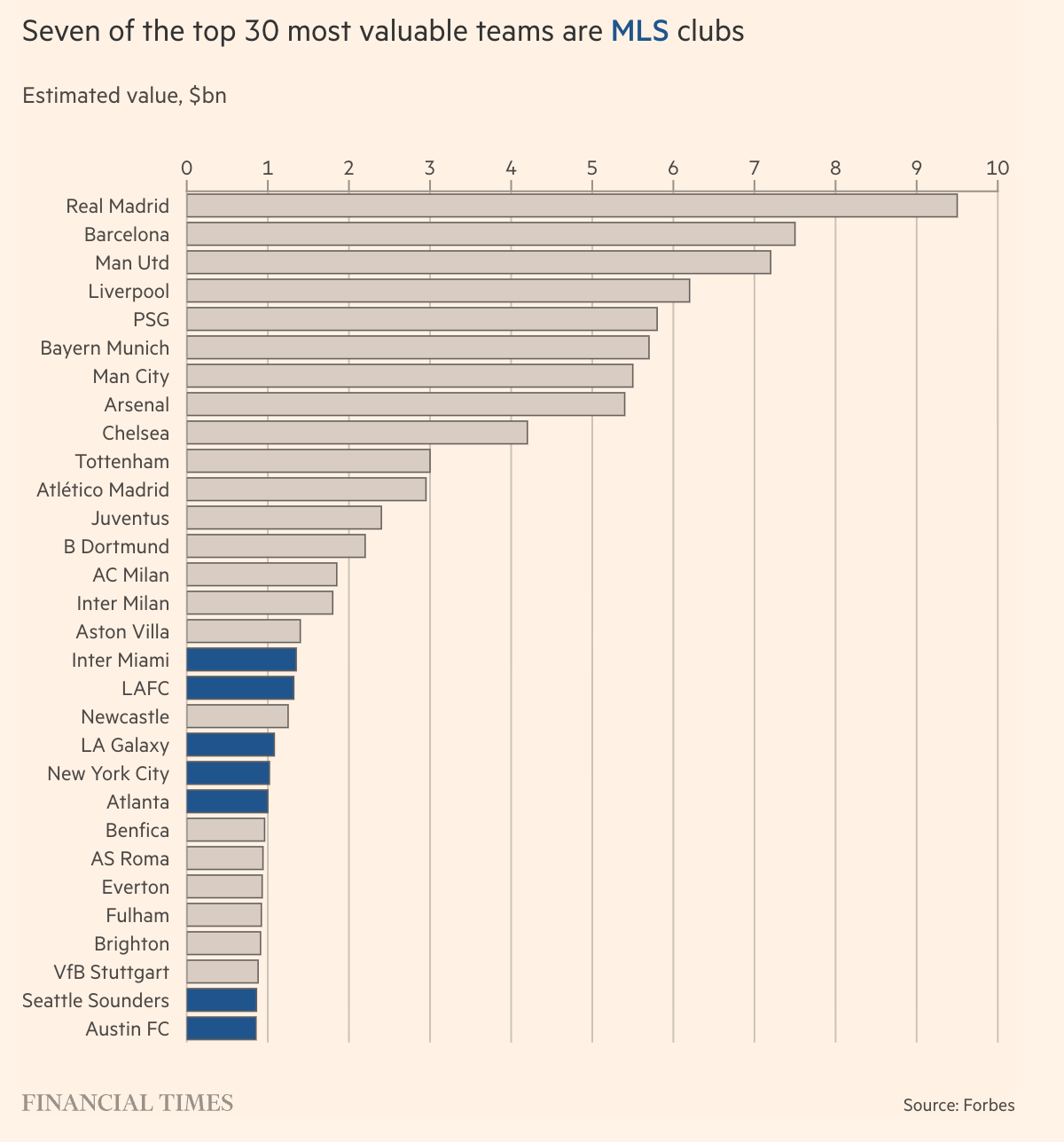
And America is no longer just hosting football. America is starting to reshape it.
2) The money machine
The old World Cup was simple: teams arrived, countries watched, sponsors paid, and FIFA collected.
The new World Cup is more aggressive.
More teams. More matches. More hospitality. More premium tickets. More broadcast inventory. More sponsor slots. More data. More resale fees. More everything.4
Statement of revenue for 2023-2026 (USD million)
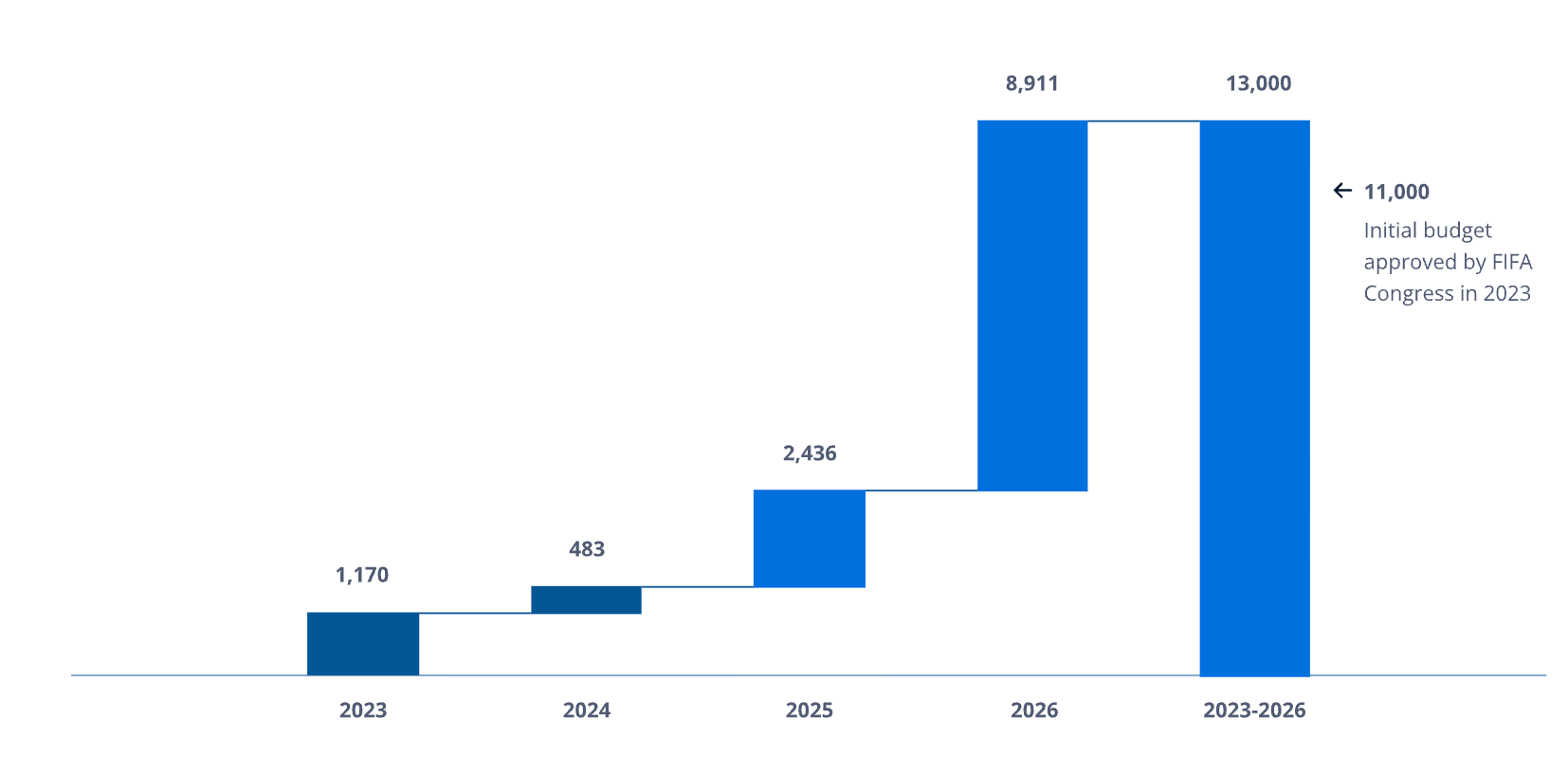
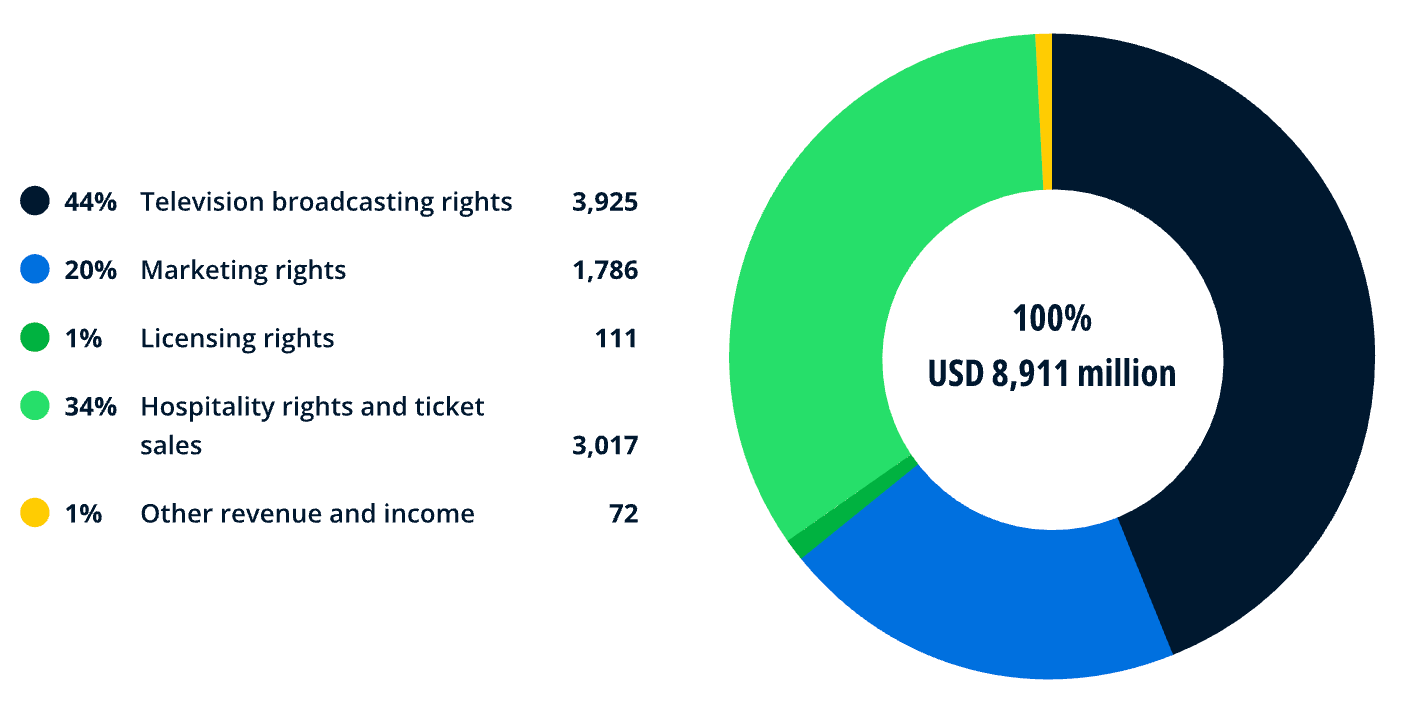
The Financial Times reported that FIFA expects close to …:
$4bn from television rights
about $1.8bn from sponsorships
and more than $3bn from ticketing and hospitality
… for this World Cup. Ticketing and hospitality are the big jump: more matches help, but so do higher prices and FIFA’s own resale platform.5
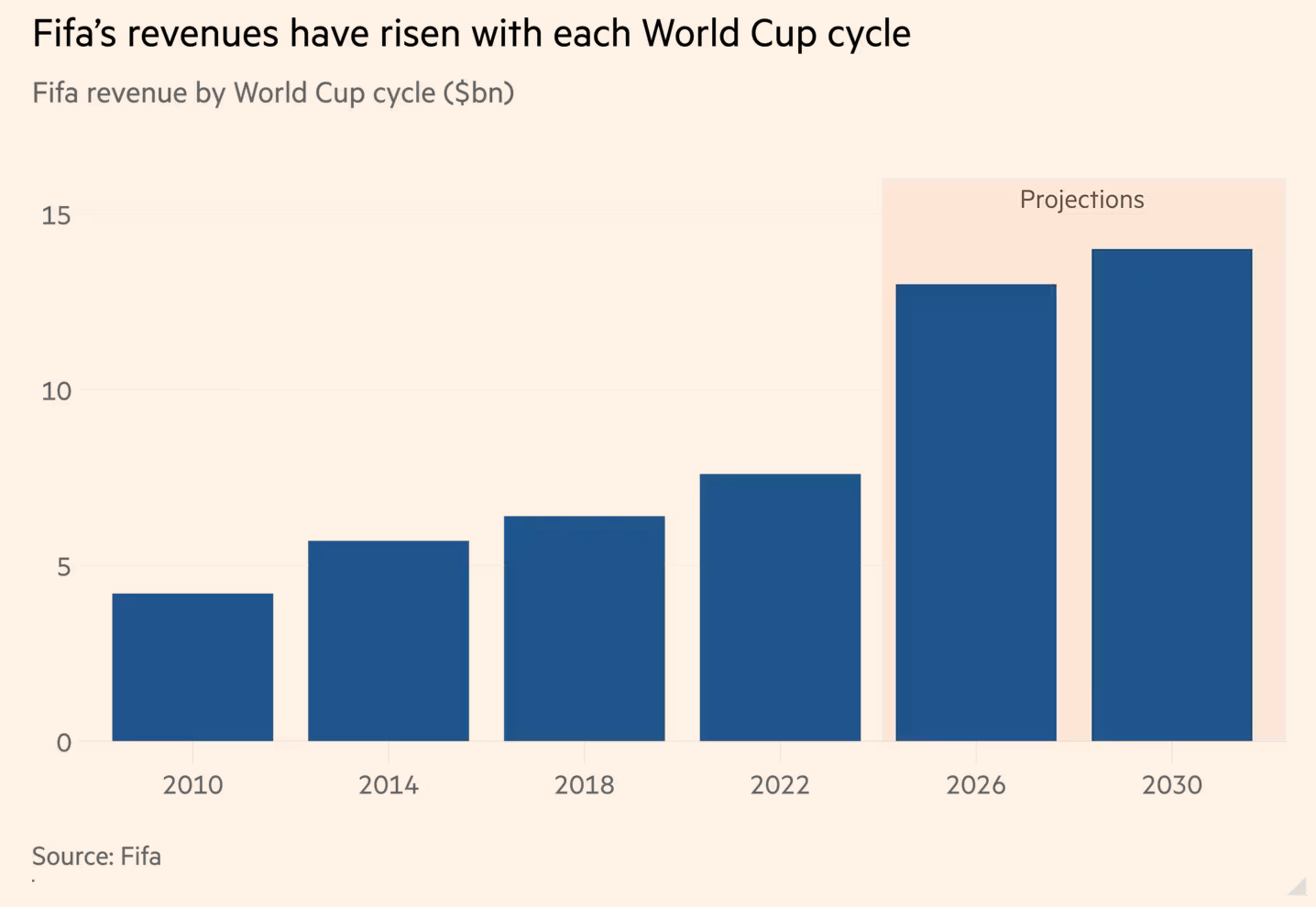
That is the World Cup business model in one picture:
National emotion
      ↓
Global attention
      ↓
TV rights + sponsors + tickets + hospitality
      ↓
FIFA revenue
      ↓
Distributions, reserves, operations, development programmes
      ↓
More political power inside football
Simple game. Complicated machine.
The reason sponsors and broadcasters pay is obvious: almost nobody can still gather the planet at the same time.
The 2022 final between Argentina and France reached close to 1.5bn people globally, according to FIFA. That is more than ‘audience’. That is a rare piece of shared human attention.6
In a fragmented media world, that matters.
Most content is now personal. Your feed is not my feed. Your Netflix is not my Netflix. Your children probably live inside an algorithmic cave you are allowed to finance but not enter.
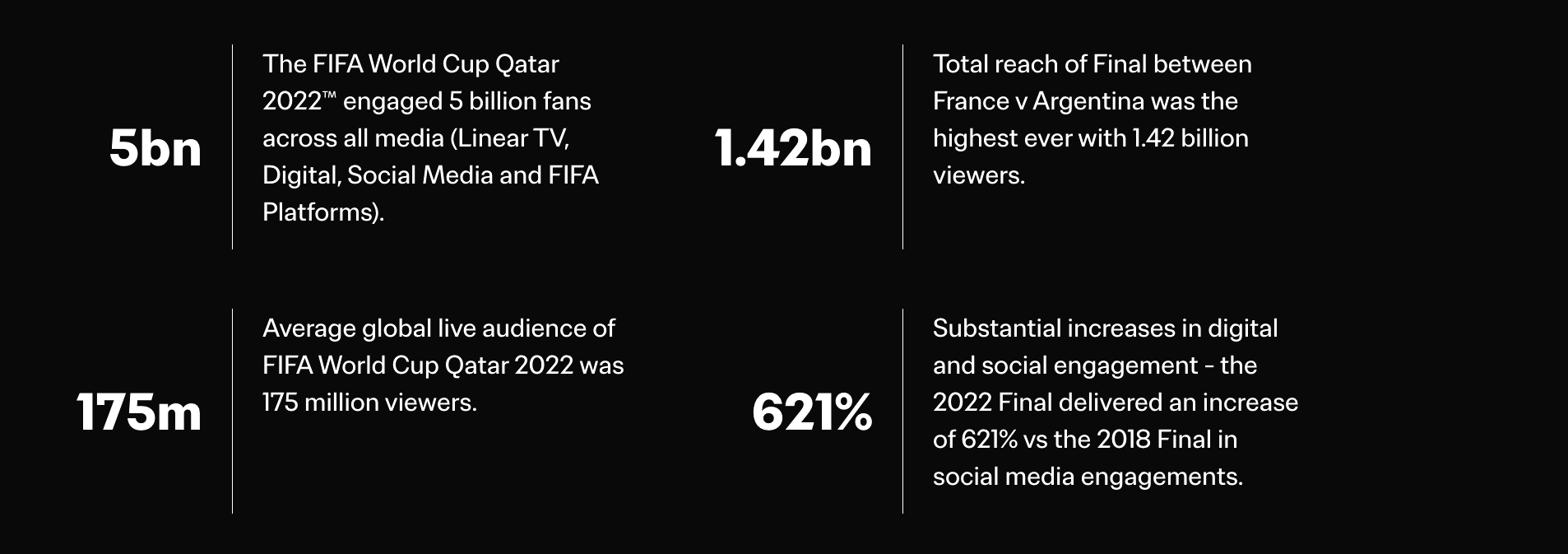
The World Cup cuts across that.
For a few weeks, people watch the same thing. In bars, offices, living rooms, airports, WhatsApp groups, and slightly suspicious fan zones sponsored by global beer brands.
That is why it is valuable.
3) America is buying the game too
There is a second story running underneath this World Cup.
US capital has moved heavily into football.
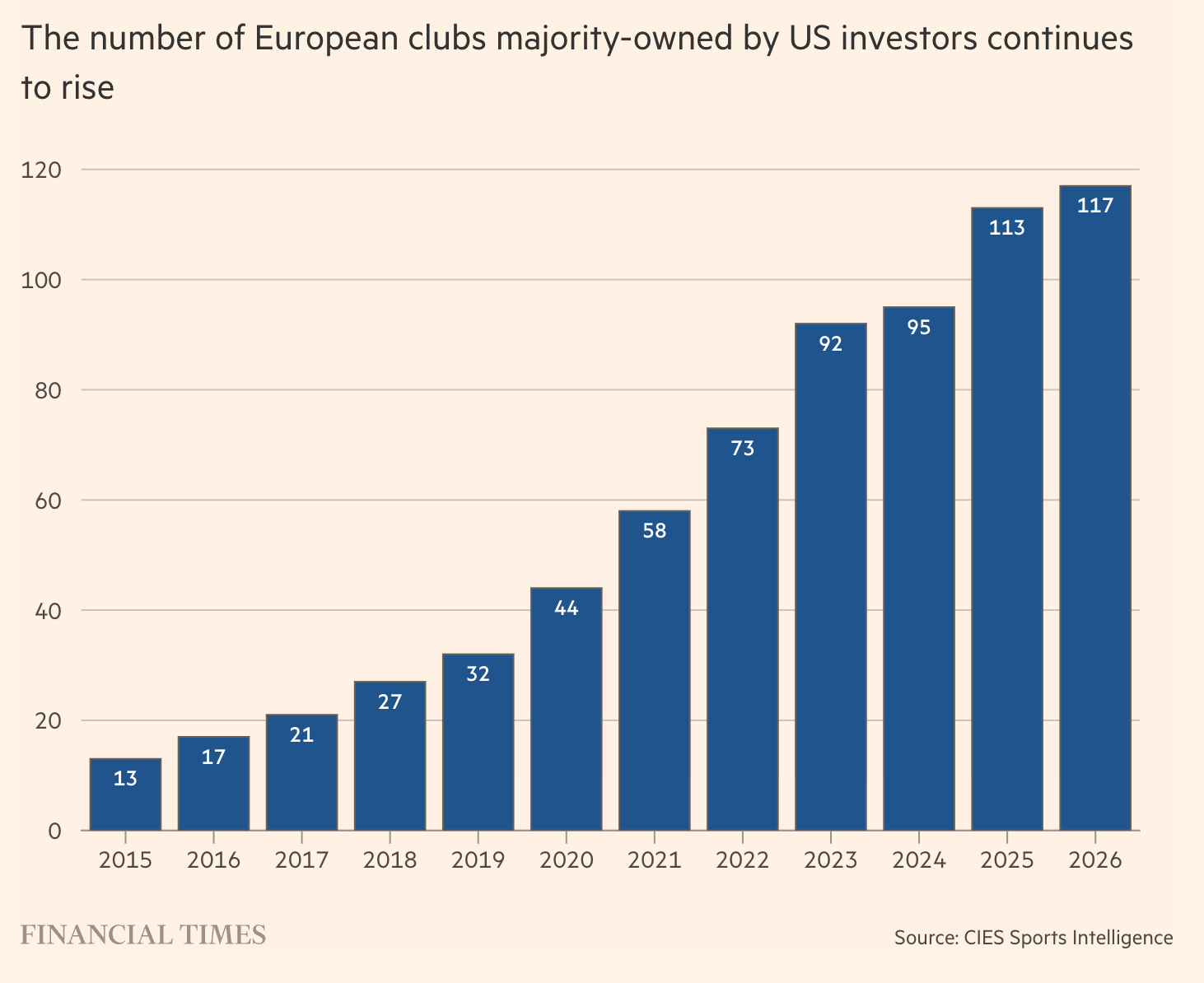
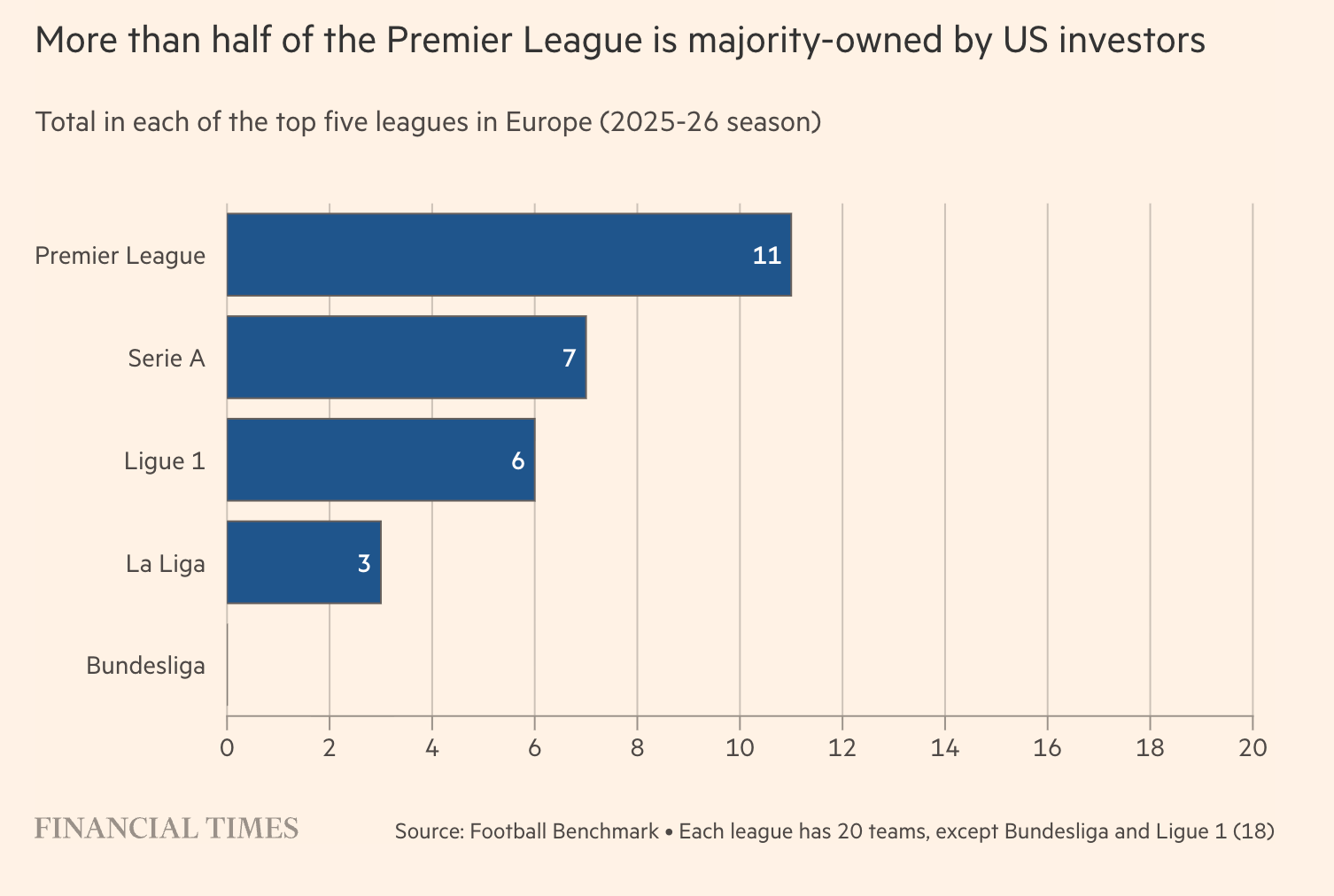
The FT reported that Americans now own 117 European clubs, including more than half of the English Premier League, more than a third of Italy’s Serie A, and more than a quarter of France’s Ligue 1.7
The logic is not difficult.
US sports teams have become brutally expensive. European football clubs still look cheaper on a revenue multiple basis. The sport is global. The brands are old. The fan bases are emotional. The stadiums can be upgraded. Commercial operations can be expanded.
To an American investor, football can look like an under-monetised asset class.
To many European fans, that sentence alone is enough to ruin the afternoon.
Because football is not only an asset. It is also heritage, place, memory, class, family, routine, religion without paperwork.
That is the tension.
American money looks at football and sees upside.
Many fans look at American money and see ticket inflation, VIP boxes, multi-club ownership, Super League ghosts, and half-time shows that may one day require their own insurance policy.
Both can be true.
4) The awkward part
You cannot write about FIFA’s money machine without mentioning the smell in the basement.
In 2015, the US Department of Justice unsealed charges against FIFA officials and sports marketing executives involving racketeering, wire fraud, money laundering and corruption. The scandal eventually forced Sepp Blatter out.89

The FT has also raised questions about FIFA’s current financial transparency, including how World Cup revenues are spent and how money flows to FIFA’s 211 member associations.1011
That does not mean the whole tournament is rotten. But it does mean the business model should not be treated like harmless entertainment.
When one organisation controls the biggest sports event on earth, distributes billions across member associations, chooses hosts, sells rights, sets rules, and operates with limited external scrutiny, governance is not a side issue.
It is part of the product.
The World Cup sells joy.
It also sells access, legitimacy, prestige, and political theatre.
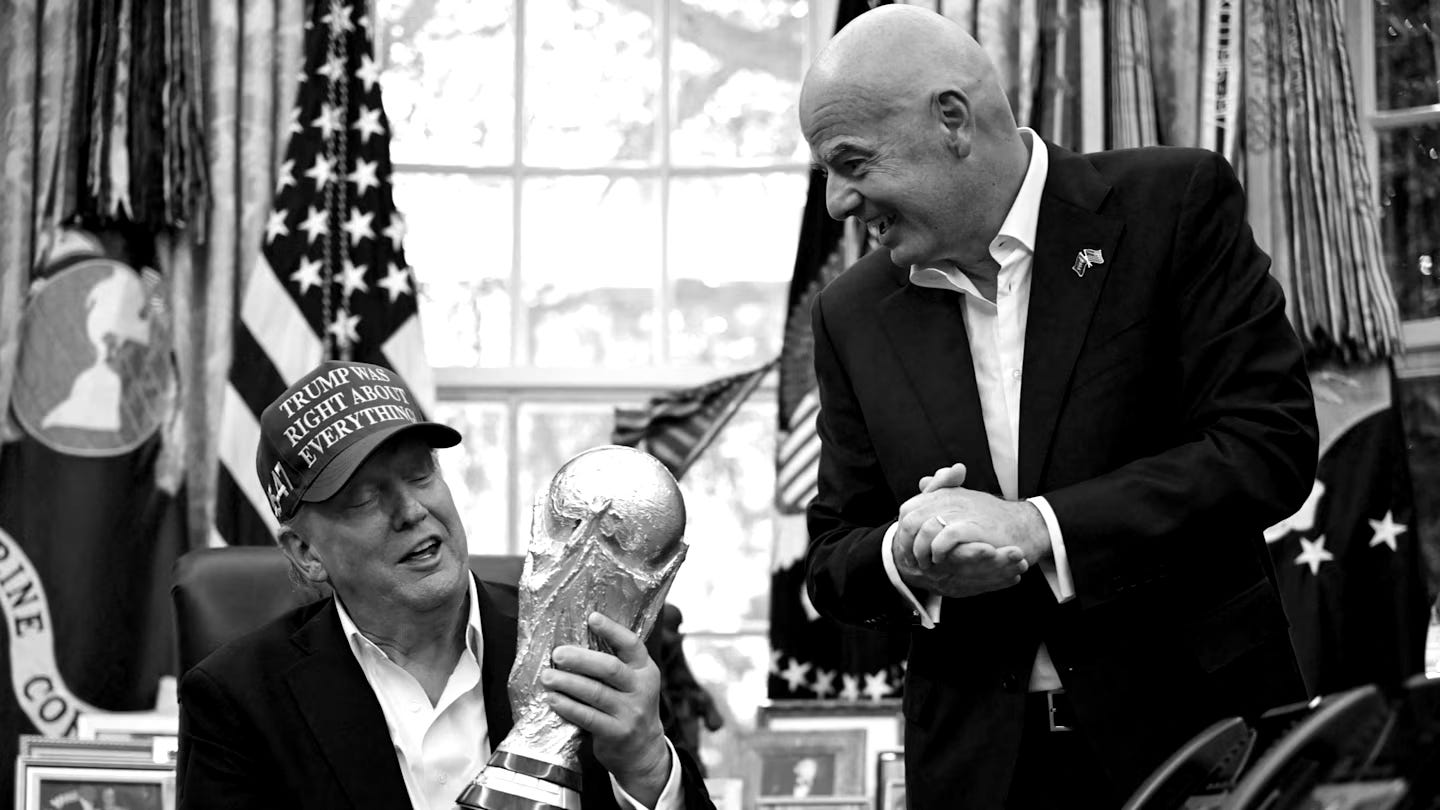
This year, that political theatre will be especially visible. The tournament is hosted mainly in the US, under Donald Trump, with cities, immigration politics, ticket prices, and FIFA itself all becoming part of the story.12
But the politics should not swallow the football.
That would give politicians too much credit. A common mistake, usually made by politicians.
5) Why it still works
Here is the strange thing.
People know the World Cup is commercial. They know FIFA is controversial. They know ticket prices are often absurd. They know sponsors are not doing this out of spiritual commitment to corner kicks.
And still they watch.
Because the product is almost unfairly strong.
A World Cup match is simple enough for a child to understand and emotionally large enough to occupy an entire country. It is one of the few remaining formats where a single moment can jump from a stadium to a billion people almost instantly.
A penalty.
A mistake.
A teenager becoming famous.
A goalkeeper becoming a national enemy.
A country discovering, for 90 minutes, that it has always had strong views on defensive midfield structure.
This is why the World Cup survives its own organisers.
FIFA gets to stage and monetise it.
But it does not fully own what makes it powerful.
The power comes from the fans, the players, the flags, the old memories, the impossible goals, and the fact that every country can briefly imagine a better version of itself.
That is the magic. The business is built on top of it.
Our view
The World Cup is the clearest example of what happens when emotion becomes infrastructure. Founders and leaders of any organization can learn from FIFA.
Football creates the emotion.
Media turns it into reach.
Sponsors turn reach into money.
FIFA turns money into power.
And then, every four years, the cycle starts again.
So tomorrow, watch the football. Enjoy the goals. Complain about the referees.
Question the ticket prices.
And remember: behind the world’s simplest game sits one of the most sophisticated business machines ever built.
Not bad for something America once ranked below tractor-pulling.
🎚️🎚️🎚️🎚️ Producer’s Note
When Snoop Dogg shows up as a shareholder at Swansea, Ryan Reynolds turns Wrexham into a global content asset, and US investors keep buying European clubs, something has clearly shifted.
Football is still football.
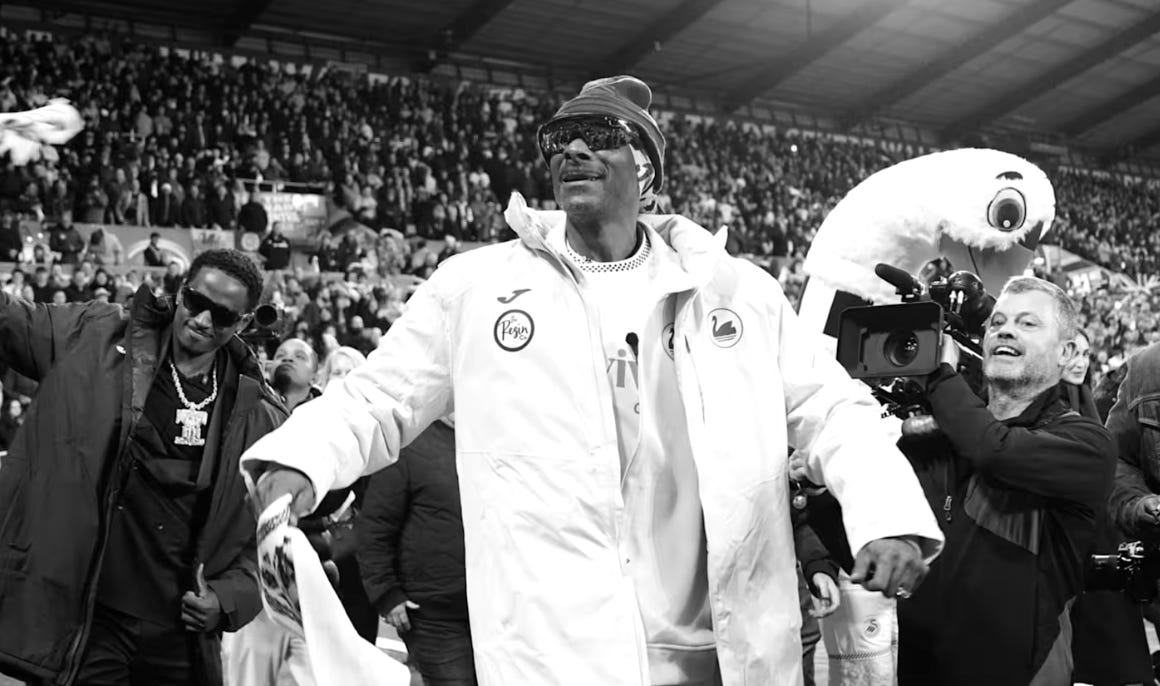
But around it, a new industry is forming: sport, media, celebrity, private capital, hospitality, streaming, and global fandom all rolled into one.
So yes, Snoop fits.
Who owns the game now?
Go Switzerland 🇨🇭
Fab 🗽
LinkedIn | Insta | X
StudioAlpha Capital is a Delaware-structured pre-seed venture fund backing AI-native B2B software startups at day zero. Legal counsel: Cooley LLP. Fund administration: AngelList.
Sources
https://www.nytimes.com/athletic/6085823/2025/01/27/2026-world-cup-united-states-canada-mexico/
https://www.wsj.com/sports/soccer/americans-used-to-jeer-at-soccer-now-its-more-popular-than-baseball-bc4d89ad?st=SvwCLQ&reflink=article_copyURL_share
https://inside.fifa.com/official-documents/annual-report/2024/financials/revised-2023-2026-budget
https://inside.fifa.com/tournament-organisation/audience-reports/qatar-2022
https://universe.byu.edu/2015/05/27/soccer-officials-arrested-at-swiss-hotel-in-corruption-probe/
https://www.justice.gov/archives/opa/pr/nine-fifa-officials-and-five-corporate-executives-indicted-racketeering-conspiracy-and
https://www.ft.com/content/5b79e86d-1df2-4bfa-9bde-f43eb692f11c?syn-25a6b1a6=1
https://www.ft.com/content/f5b8ec55-da1d-4cb6-9fe0-30f380b08165
https://www.ft.com/content/8b74a6d7-899e-41d0-8ecd-4664dd33aa9a?syn-25a6b1a6=1