

The Purpose Premium
What SpaceX’s IPO shows about belief, control, and the cost of capital

SpaceX is not a normal IPO.
It is being discussed as a stock market event, a Musk event, an AI event, a space event, and a governance event. All of that is true. But for leaders, the more useful lens is simpler: SpaceX is a pressure test for purpose.
Purpose usually gets treated as soft management language. A sentence on a website. A slide in an all-hands. A paragraph in the annual report. SpaceX shows the harder version. Purpose can affect who funds you, how much patience they give you, how much talent wants to join you, how much risk people tolerate, and how much governance they are willing to surrender.
That is capital structure.

1) What happened
SpaceX is preparing what could become the largest IPO in history. According to the FT, the company is seeking to raise $75bn at $135 per share, with the deal potentially rising to $86bn if underwriters use the greenshoe option. That would value SpaceX at about $1.78tn. The same filing also makes the tension clear: SpaceX is lossmaking, would trade at about 92 times annual revenue, and still wants to fund AI infrastructure, launch vehicles, Starlink, and longer-term space ambitions.1
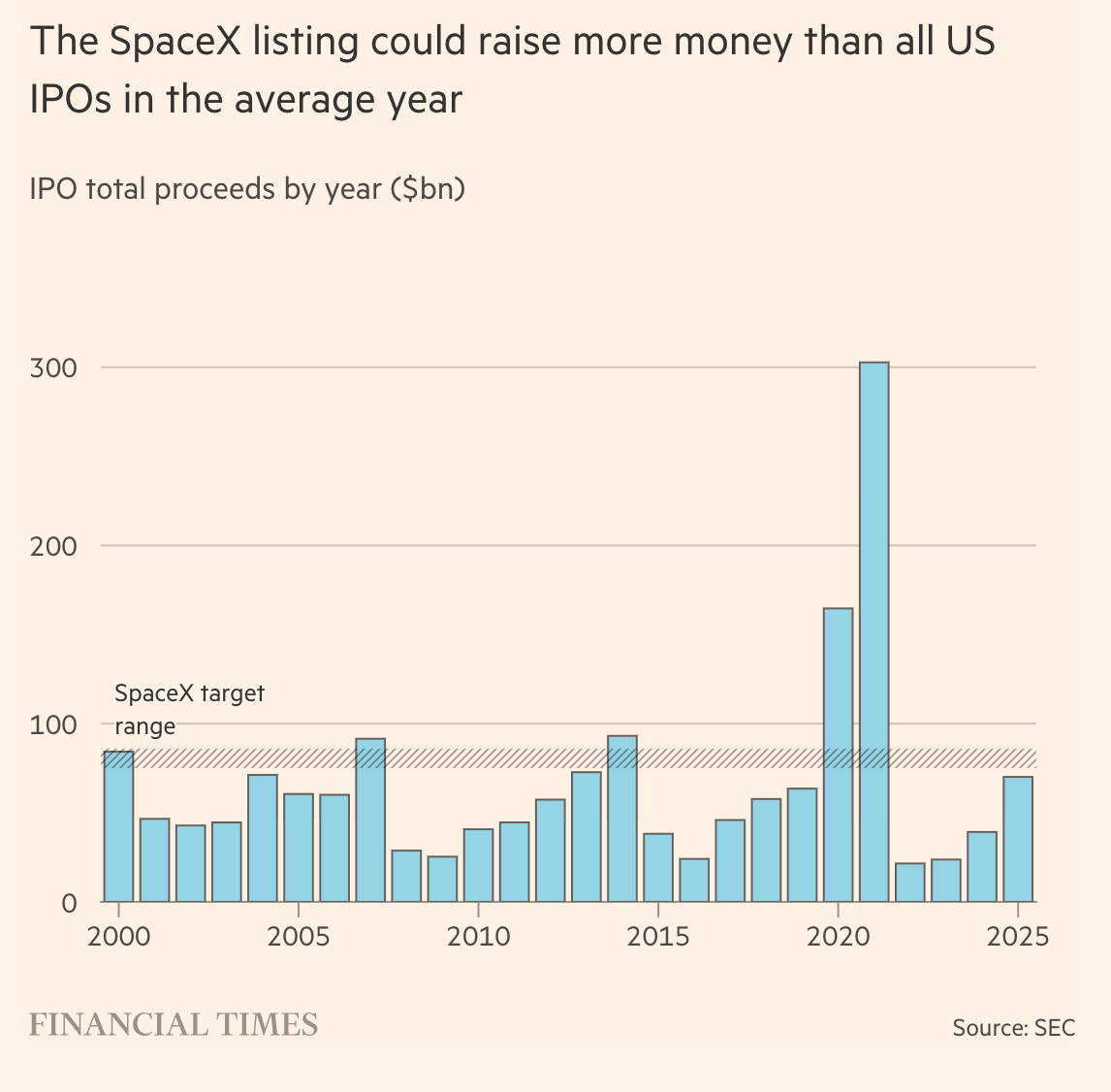
This is why the IPO is not a normal public-market underwriting case. Investors are being asked to buy more than next year’s earnings. They are being asked to underwrite a company that presents itself as rocket maker, satellite network, AI infrastructure builder, and civilisational project at the same time. That is where the purpose question starts.2
That makes the IPO feel closer to late-stage venture investing than normal public equity investing. Bill Ackman said this directly in his All-In interview. His frame for SpaceX was venture-style underwriting: people, opportunity, context, and deal.3
