If you ever wanted a real-world example of disruption hitting an industry nobody thought was touchable, here it is: the FT reports that McKinsey, BCG, Bain, PwC, Deloitte - basically the puppet-masters of global management - are freezing starting salaries and cutting junior hiring because AI is eating the bottom of their famous pyramid aka up or out.1
Think about that for a second.
Companies hire McKinsey to avoid getting disrupted. Now McKinsey itself is getting disrupted. Things that makes you go hmm?
Loading...
McKinsey is the firm CEOs call at 2 a.m. when they don’t know what to do. The shadow CEO. The adult supervision. The “please tell the board it wasn’t my fault” insurance policy.
So what exactly are these CEOs going to do when their consultants show up with fewer juniors, less PowerPoint, and more AI?
That’s the fun part. The FT quotes PwC’s global chair saying AI is already boosting productivity and cutting the need for generalist analysts - the very people who used to grind through the work that financed the partner bonuses. Another consulting veteran warns that the old “pyramid” model might shrink into a “box model,” with far fewer juniors and a much heavier reliance on actual experts.2
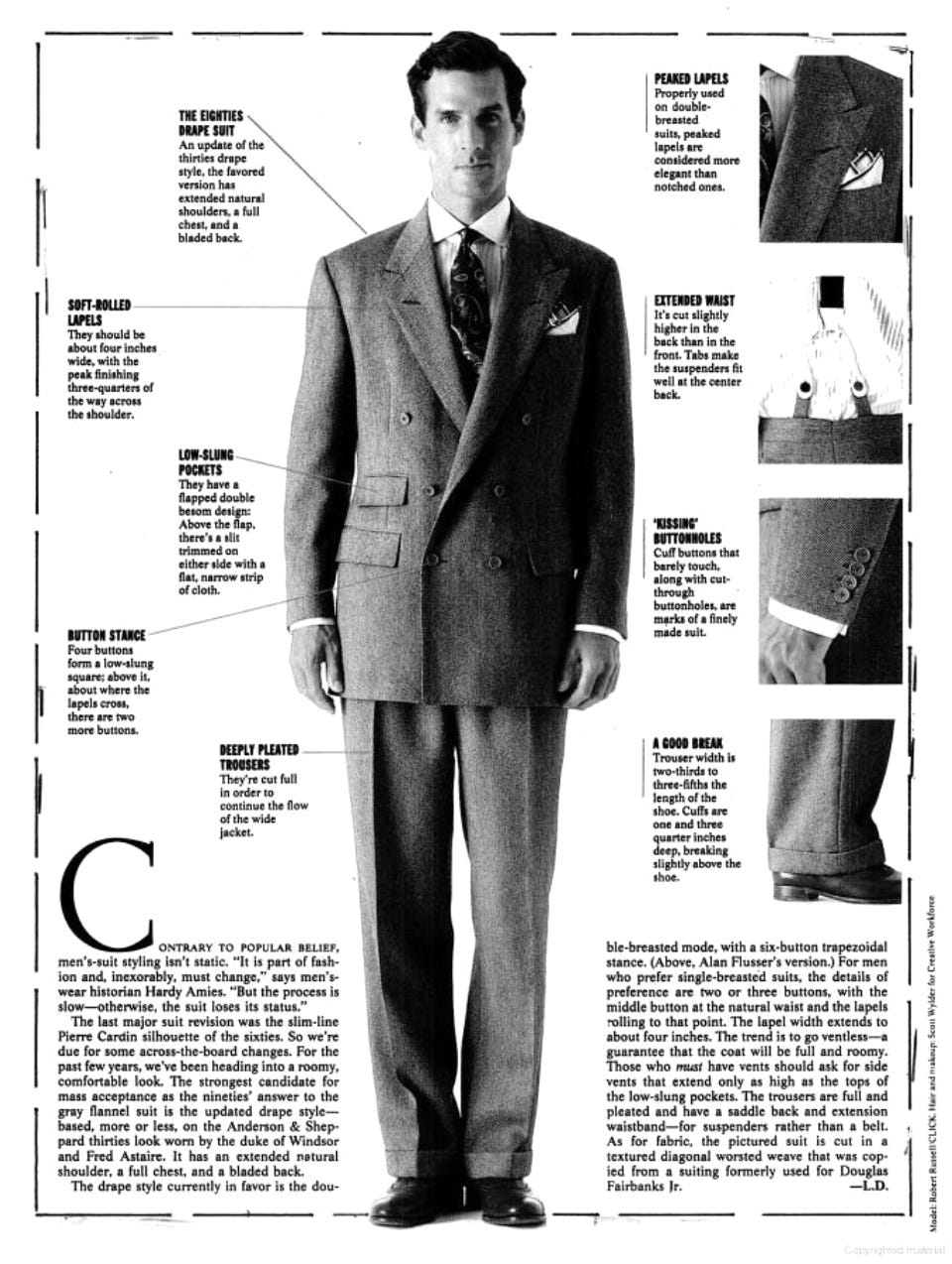
Pic. The 1980s Power-Suit Consultant: Back when disruption meant switching from fax to phone. (source)
Translation: AI is quietly dismantling the labor structure of a $300bn industry. And if this can happen to the most “intellectually protected” job category in the world, then every other industry is on the menu.
That’s the point of this chapter: disruption doesn’t wait politely at the door. It moves in through the side entrance and knocks out the economics first. Consulting isn’t being disrupted because AI is brilliant. It’s being disrupted because AI makes the bottom of the pyramid unnecessary - and the entire model was built on that base.
Want my prediction? - The consultants won’t be disrupted - the CEOs will. AI is about to remove all the hiding places for weak leadership, and the best McK people won’t fix the system anymore… they’ll replace it.
Welcome to Innovation III: Disruptive Innovation.
1. What People Get Wrong About Disruption
Pic. Corporate wisdom: The original consulting jargon generator. (source)
Let’s start with the classic: Disruption is not doing something new. It’s not “faster”, “AI-powered”, “10x”. It’s definitely not putting GPT into a slide and shouting “category creation”.
📦 Clayton M. Christensen - The Man Behind “Disruption”3
Clayton Christensen (1952–2020) was a Harvard Business School professor and the father of disruptive innovation - probably the most misunderstood idea in business.
His big insight was simple but radical:
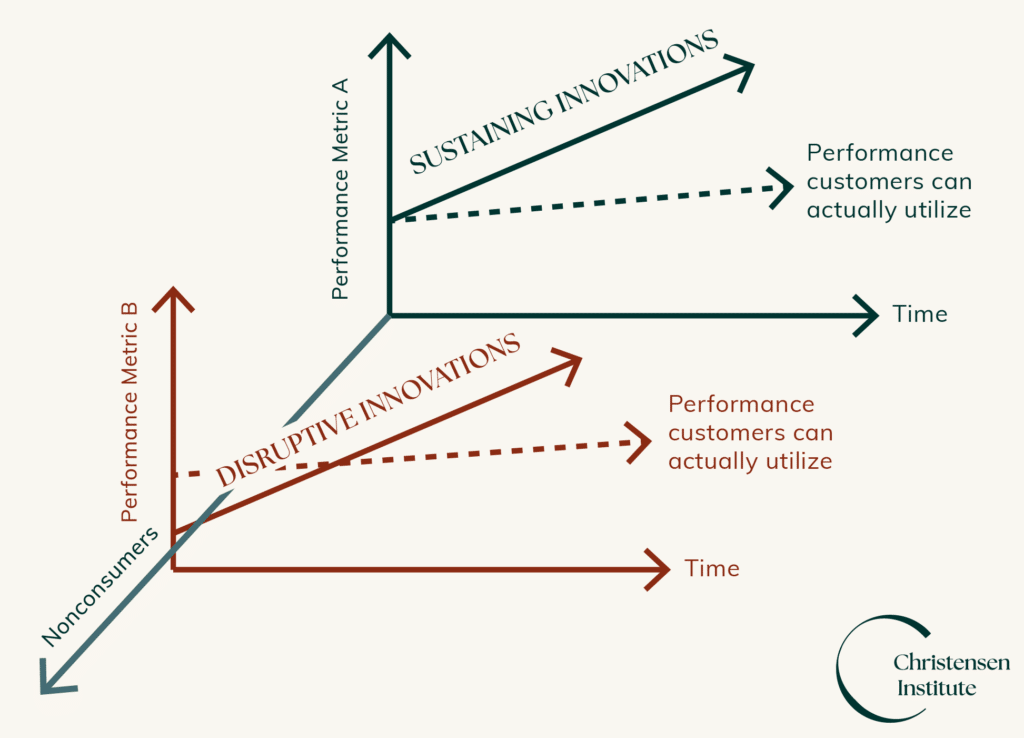
Disruptors win from the bottom, not the top. They enter with a cheap, simple product that incumbents ignore and then quietly take over the entire market.
Christensen showed why big companies fail even when they’re doing everything “right”:
His books - especially The Innovator’s Dilemma (1997)4 and The Innovator’s Solution (2003)5 - shaped Silicon Valley’s playbook for two decades. Jobs, Bezos, and Reed Hastings treated them as required reading. We, too 😏.
And the irony? - The world is finally catching up to his theory, right when AI is accelerating every mechanism he described.
Clayton Christensen - the person who actually invented the theory - had a very boring, very precise definition:
In one sentence: disruption starts at the low end - cheap, overlooked, unprofitable. You enter where incumbents don’t care, grow quietly, and one day you eat their lunch while they’re busy serving their best customers.6
HBR (2015) even had to publish a full article called “What Is Disruptive Innovation” because the term became so abused that Christensen himself had to come back and explain it to everyone like a frustrated professor aka Andy.7
Why this matters: 95% of startups who think they’re “disruptive”… are just doing good product innovation (compare Innovation Iand II). Valuable, important but not disruptive.
And that’s perfectly fine. The world doesn’t need 20,000 mini-NVIDIAs.
2. Why Incumbents Don’t Lose Because They’re Stupid
One of Christensen’s most misunderstood observations:
Big companies lose because they follow rational incentives. Not because they are asleep at the wheel.
If you’re Salesforce, Workday, Oracle, Adobe, UBS - whoever - you optimize for:
your biggest customers
your highest margins
your existing processes
your quarterly expectations
That’s what your board wants. That’s what your shareholders want. That’s what your CFO expects from you.
So when a tiny startup shows up and sells something that looks like a toy? A “simple” version? Or a tool for customers with small budgets?
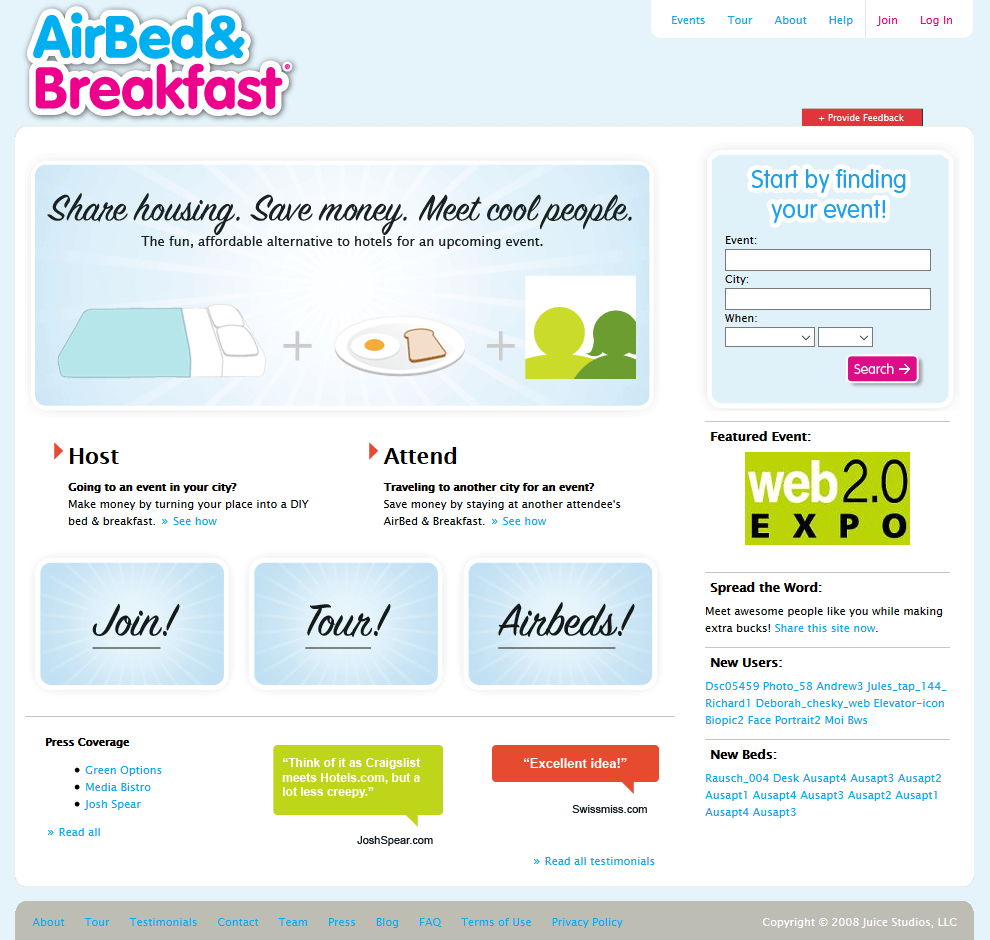
Pic. AirB&B 2008: “Air mattresses on the floor?! A toy.” (source)
A rational incumbent ignores it.
That’s the paradox of disruption: The behavior that kills you is the same behavior that made you successful.
MIT Sloan has a great Christensen interview on this. He basically says: big companies lose not because the CEO is dumb - but because the CEO is too good at their job.8
3. Why AI Creates the Largest Window for Disruption Since 1998
Pic. Show me the money: If your AI consultant says ‘help me help you,’ run. (source)
This part of the blog looks at the one question every founder asks right now: Why is AI suddenly creating so much movement - both opportunity and fear - across the entire software industry? We break down what’s actually changing underneath the surface: the collapsing cost of intelligence, why small teams suddenly have structural advantages over giants, which categories are becoming fragile (exactly: e.g. Consulting), and why this moment resembles the early internet - but with far more speed and impact. If you want to understand where disruption really comes from in 2025, this is the chapter.
3.1 The AI Cost Curve: When Economics Breaks Before Anyone Notices
If you step back from all the AI hype and just look at the cost line, the picture becomes very simple: the price of intelligence is collapsing. And in business, when cost collapses, everything else follows.
AI didn’t make tasks “a bit cheaper.” It made tasks 10× → 100× → sometimes 1,000× cheaper. And Christensen’s rule kicks in immediately:
10× cheaper: the market resets
100× cheaper: new markets appear
1,000× cheaper: the old model becomes economically impossible
This is exactly where we are now. Welcome to 2025. (Forget the AI-bubble drama in the press).
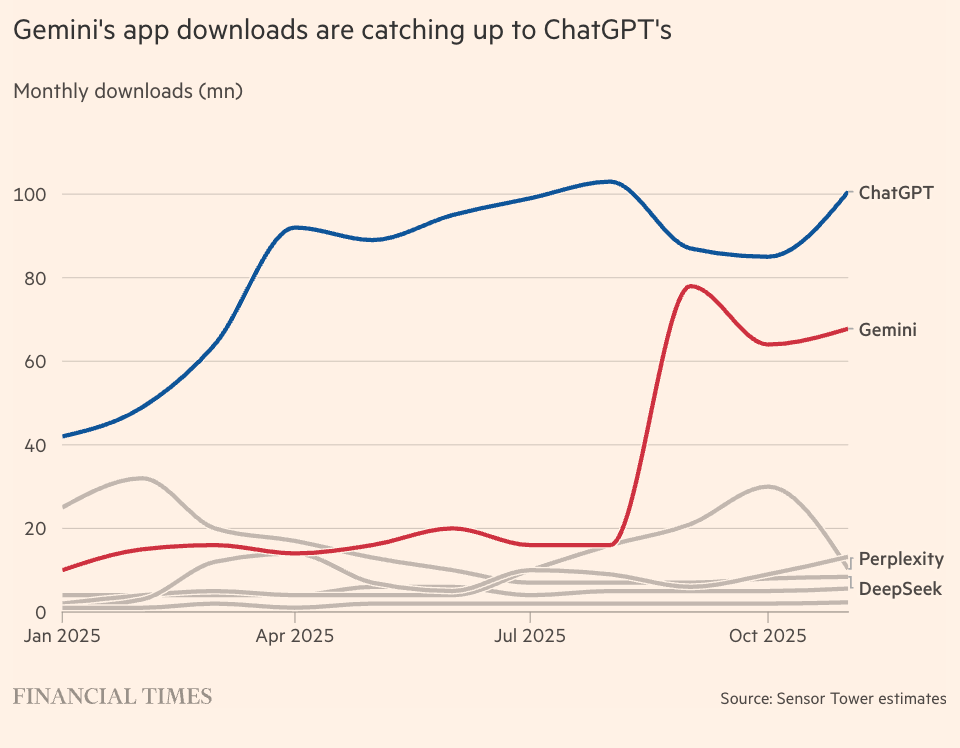
Pic. Sam Altmann: “Hey guys: CODE RED.” (extra hours, focus on ChatGPT) … blue curve: It works (source, source2)
Models get faster and cheaper every quarter. OpenAI slashes inference costs, Meta runs models locally, Anthropic boosts reasoning for less money. Suddenly, work that required entire departments costs cents.
That’s a tech improvement in another dimension. That’s an economic disruption event.
3.2 The Attacker’s Advantage: Startups Don’t Have to Defend the Past
Pic. VC listening to a founder explain why incumbents are slow: ‘Tell me more…’ (source)
This is the part Christensen explained so perfectly: startups win because they build on the new economics - while incumbents are stuck defending the old ones.
Startups have:
no legacy architecture
no historical pricing to protect
no enterprise clients who freak out when workflows change
no slow governance
no politics
no sunk-cost infrastructure
And most importantly:
👉 they can design natively for the new cost curve.
Incumbents can’t. Even if the CEO understands what’s happening, the rest of the organization is built to protect yesterday, not build tomorrow.
This is why “big companies are slow” is not an insult - it’s a structural fact.
3.3 Who Is Actually at Risk (And Why No One Wants to Admit It)
Let’s be honest: some industries were only stable because work was expensive, slow, and manual. AI killed all three.
This makes certain categories unnaturally fragile - not because they’re bad products, but because their economics no longer make sense:
CRM giants overloaded with features that users don’t need
Ticketing systems that turned simple workflows into bureaucracy
ERP modules that depend on armies of consultants
Legal and banking operations built entirely on human hours
Service firms who sell processes that AI can automate (I know, e.g. consulting)
Software where “complexity” became the business model
AI doesn’t disrupt these markets with “a better design.” It disrupts them by removing the work, not managing it.
And incumbents can’t just follow - because doing so destroys their core revenue.
3.4 Zero Marginal Cost: The Physics of AI-Native Companies
What makes AI-native startups fundamentally different is not the technology - it’s the economics.
AI-native companies:
get better as usage grows
scale without hiring
automate workflows instead of documenting them
ship weekly, not quarterly
run on infrastructures incumbents can’t adopt without breaking their P&L
produce output at near-zero marginal cost
This is why small teams suddenly feel “bigger” than companies with thousands of employees.
The software doesn’t ask for permission. It doesn’t need training. It doesn’t take weekends off. It just runs. Every day. Cheaper and faster.
3.5 Why This Moment Looks and Feels Like 1998 - Just Faster
Back in 1998, the internet created the same pattern:
cost of distribution collapsed
incumbents ignored early signs
young teams outran giants
entire categories flipped within years
Pic. Meet the 2025 consulting pyramid: flat, hoodie-based, terrifyingly effective. Found your own company and consult help yourself. (source)
AI has the same dynamic - except compressed into quarters, not decades.
A two-person team today can build something that outperforms a 5,000-person company. As mentioned before, not because they’re geniuses but because the economics shifted underneath everyone at the same time.
That’s why this is the biggest window for disruption since the early internet. And why founders who understand the new cost curve suddenly feel the wind at their back.
4. The Blueprint of a Truly Disruptive Startup (2025 Edition)
If AI is reshaping the rules of the game, what exactly should founders do differently? This chapter breaks down the practical side: how disruptive companies really start, why “structural advantage” matters more than features, which traps kill early momentum, and how AI-native teams build differently than incumbents. If Chapter 3 explains why the window is open, this chapter explains how to step through it.
4.1 Start Where Incumbents Aren’t Looking
True disruption rarely starts with glamour. It begins in the places incumbents ignore - the “small”, “unattractive”, or “too cheap” segments that don’t fit their margin expectations.
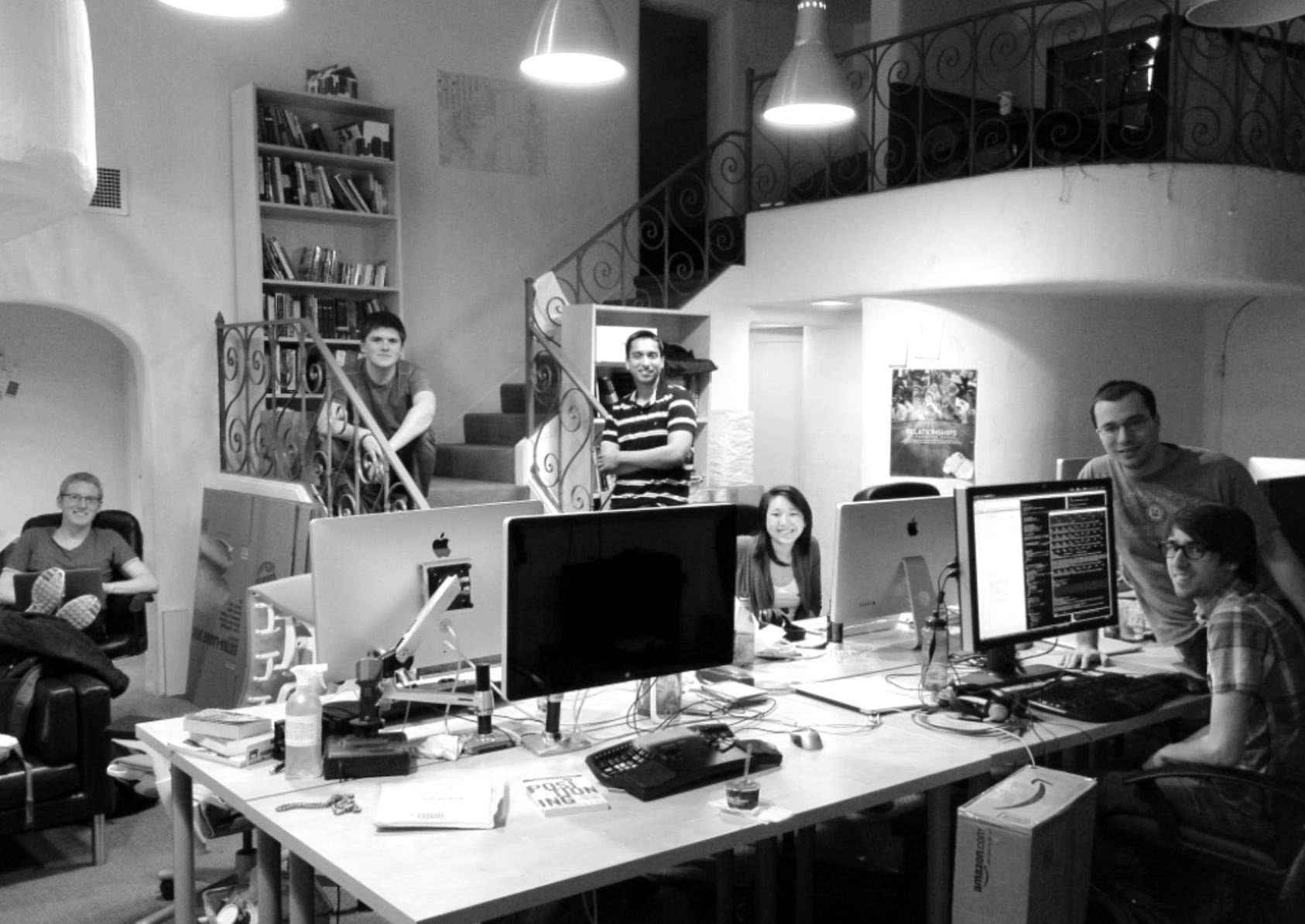
Pic. The start of an incumbent - Bezos in action 1995 (source)
Christensen’s insight is still spot on: If your early product looks impressive to enterprise buyers, you’re not disruptive. You’re simply building a lighter version of the status quo.
Disruptive startups start with:
customers who are over-served
workflows incumbents consider boring
edges of the market that look too small to chase
problems nobody bothers to solve properly
It’s counterintuitive, but precisely why it works: big companies can’t follow without hurting themselves.
4.2 Structural Advantage Beats Feature Lists
Here’s the thing most founders underestimate: to disrupt, you don’t need better features - you need a different engine.
In 2025, the engine is AI-native. Not AI-added. Not AI-in-a-menu. AI-native means you design the product from the workflow outward, where intelligence is part of the core logic, not a button on the side.
Pic. This is what I call a garage. Steve Woz in action in the late 70ties. (source)
That gives you structural advantages incumbents can’t copy:
workflows that update themselves
systems that learn with each use
near-zero-cost automation
data loops incumbents can’t build retroactively
This is where almost every startup we work with inside StudioAlpha is leaning: a product that gets stronger simply by being used - without needing headcount to scale.
Incumbents cannot retrofit this without breaking everything that currently pays their bills.
4.3 Speed, Not Polish, Wins This Game
A funny thing happens when the cost curve flips: the bottleneck becomes speed, not resources.
Disruptive teams don’t win because they’re more sophisticated. They win because they ship before anyone else even finishes the strategy slide.
Pic. As your granmother told you: drink enough! - Mark Zuckerberg (you see, nobody is too young to start her/his business) (source)
You can feel it inside their companies:
fewer meetings
smaller roadmaps
simpler products
more experiments
courage to delete features
Good disruptors are allergic to complexity. Their product decisions are almost brutally minimalistic - a few sharp use-cases that work immediately, not giant feature sets designed to please everyone.
The goal is not to look credible but unavoidable.
4.4 The Metrics That Actually Predict Disruption
Here’s the uncomfortable truth: Most early-stage metrics look impressive but mean nothing.
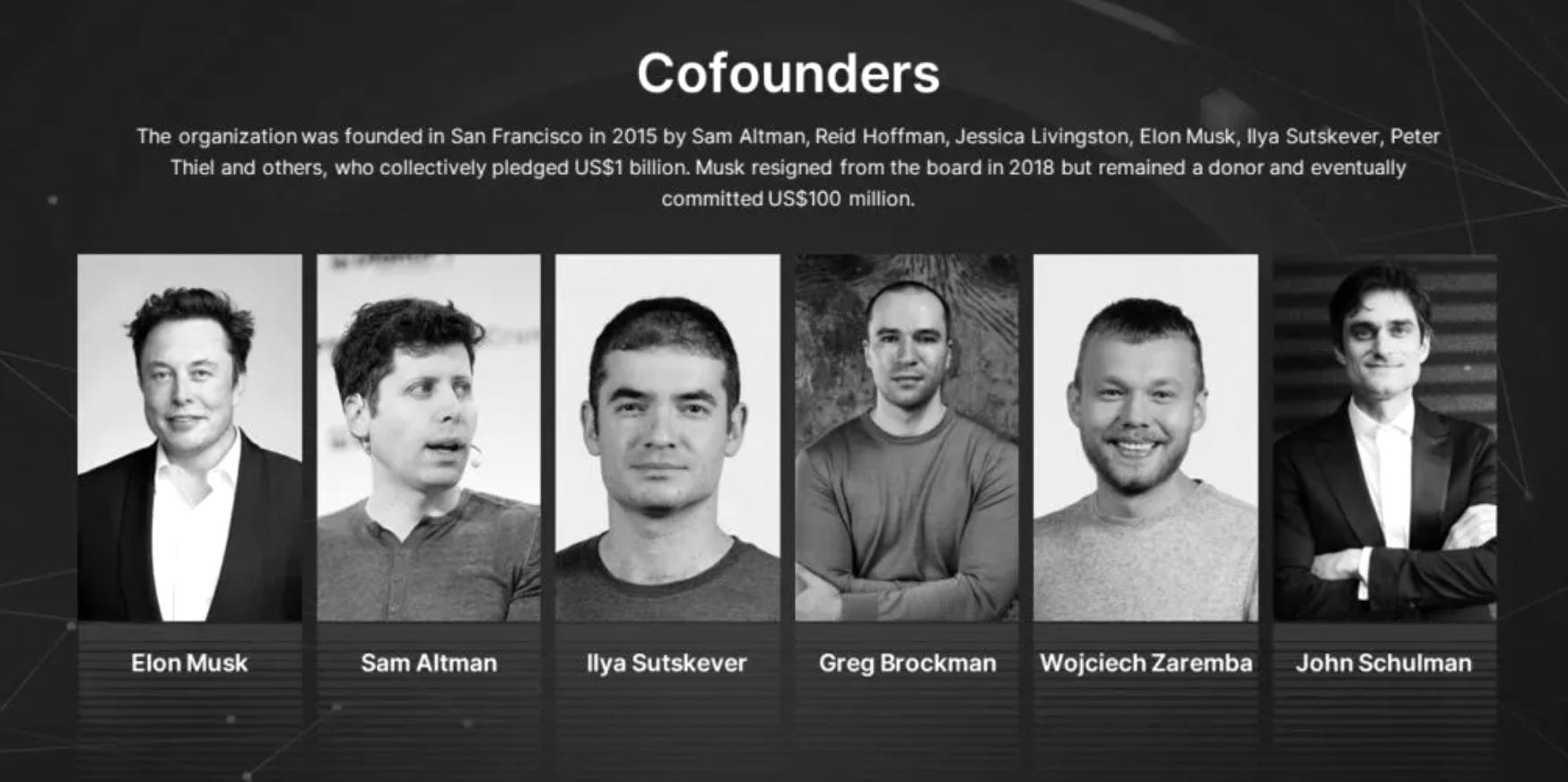
Pic. Back then when they they liked each other - Sam & ‘friends’ (source)
The real signals of disruptive potential are much simpler and much harder to fake:
Time-to-value: How fast does the user feel the benefit? Minutes? Hours?
Automation depth: Does the product do the work - or just organize it?
Marginal cost curve: Does cost go down as usage goes up?
Replacement power: Which tools, processes, or people become unnecessary?
Iteration velocity: How many times did the team improve the product this month?
You can almost predict a startup’s trajectory by watching these five patterns.
If customer success becomes the biggest team early on, that’s a red flag. If engineering ships weekly without breaking down, that’s a green one.
4.5 Go Where Incumbents Can’t Follow
This is the real unfair advantage for founders right now.
Incumbents simply cannot play in certain parts of the market - even if they want to - because doing so would cannibalize the very thing that makes them money.
AI-native startups should deliberately enter these “no-go zones”:
low-margin customers
fast iteration cycles
opinionated, narrow workflows
automation-first use-cases
processes where incumbents depend on human hours
categories where simplicity is a threat to enterprise pricing
These areas look unsexy from the outside - until suddenly they aren’t. That’s how every major disruption of the past 40 years started.
This is the blueprint: start low, move fast, build on a new economic layer - and grow into the gap that everyone else left wide open.
5. Case Studies (Rebuilt for 2025)
5.1 Canva vs Adobe
Adobe chased enterprise margins. Canva chased simplicity and people who never touched Photoshop. Outcome: you know the story.
5.2 Figma vs Adobe
Same pattern, but with multiplayer and the browser. Adobe over-served professionals. Too much option. Too complicated. Figma undershot them - then overtook.
5.3 Databricks vs Snowflake
Open source + community momentum + architecture advantages. Classic “attacker’s advantage”.
5.4 The AI-native wave vs. legacy SaaS
This is the one you care about as an investor:
AI-native vertical tools are going to replace:
Jira
Salesforce
SAP modules
Workday processes
HubSpot workflows
Not because they “have AI”. But because their cost structure allows automation, not assistance.
5.5 Your own portfolio
One more thing: disruption isn’t abstract for us. We’re watching it happen every week in our own portfolio. Some of our teams are already becoming the “quiet killers” in their industries - automating banks, rethinking legal workflows, compressing operational overhead, or replacing entire integration layers.
If you want to meet them before they hit the big stage, come to Jam at Cooley on December 10 at 3pm. All our rising stars will be in the room. If you’re an investor: this is your unfair advantage window.
Solve a painful problem at a fraction of the cost.
Benchmark against customer pain, not competitors.
Don’t go “upmarket” too early - you kill yourself.
Stop building features. Remove friction.
Don’t chase VCs. Chase users.
If you’re not embarrassed by your early product, you’re not disruptive - you’re corporate.
7. Why Most Founders Fail at Disruption
Because they:
want to look serious from day 1
pitch like McKinsey
overbuild before they have demand
fear that a simple product looks “too small”
misunderstand the psychology of incumbents
try to enter the market where incumbents make the most money
Disruptors enter where incumbents don’t want to go. That’s the whole game.
8. What Disruption Will Look Like in 2030
This is where you can make the audience’s eyes go big:
AI goes horizontal: AI-native workflows everywhere
software with zero marginal cost
companies with 30–50% fewer employees
tiny teams building products that beat 5,000-person incumbents
founders building the new operating system of work
Global fight between US + China to control the bottom layer of AI infrastructure; odds are the US wins. Europe still debating regulation; the EU will keep on losing like it has been since 1993. Does anyone even care?
The next decade won’t be dominated by “moonshots”. It’ll be dominated by teams who understand cost curves and apply AI with discipline.
Outro
Innovation usually starts looking like a toy. Disruption starts in the places no one wants to compete. And the only people who understand it early are the ones who don’t suffer from MBA gibberish.
And if you have kids: Tell them to focus on math, logic, and building things. Not BWL.
🎚️🎚️🎚️🎚️ Producer’s Note
If we follow the logic of disruption - not popularity, not “greatest hit”, but Christensen-style low-end entry that overturned an entire industry - then the single most disruptive song ever released is:
“Smells Like Teen Spirit” - Nirvana (1991)
Why?
Because it perfectly fits the disruption pattern:
It came from the low end A small Seattle grunge band, cheap production, outsider culture.
It entered a market the incumbents ignored The big labels were focused on polished pop, hair metal, and adult rock - not angsty garage bands.
It attracted people who weren’t served by the mainstream Teenagers, misfits, the entire Gen X “leave me alone” cohort.
The incumbents laughed at it… until they died Hair metal collapsed almost overnight. Radio formats changed. MTV changed. The entire sound of the ’90s flipped.
It reset the industry No special effects. No superstar packaging. No glam. Just raw authenticity that torpedoed the polished, expensive over-produce model.
It was the textbook low-end disruption in music. Is Nirvana your consultant?
Great article! I think this “first domino” framing is right: AI hits the bottom of the pyramid first because it makes research/synthesis/PowerPoint close to zero-marginal cost , and the FT salary/hiring freeze is the tell. But flattening the pyramid creates a second-order problem most people are missing: the talent pipeline. If juniors stop learning by doing the grind work, firms must reinvent apprenticeship (training “judgment + delivery,” not “deck production”).
I also think the future delivery unit isn’t a pyramid or a box: it’s small AI-native pods that ship: prototype in days, integrate into workflow, drive adoption, own outcomes.
And on “CEOs get disrupted first”: maybe not replaced, but definitely exposed. AI removes the fog that weak leadership hides behind" faster clarity means faster accountability.
Great article Fabian. Can you send it to me in .pdf so I can have AI transform it into a checklist for our team when we score potential investments in tech companies? (rick@airbridge.nl)














Great article! I think this “first domino” framing is right: AI hits the bottom of the pyramid first because it makes research/synthesis/PowerPoint close to zero-marginal cost , and the FT salary/hiring freeze is the tell. But flattening the pyramid creates a second-order problem most people are missing: the talent pipeline. If juniors stop learning by doing the grind work, firms must reinvent apprenticeship (training “judgment + delivery,” not “deck production”).
I also think the future delivery unit isn’t a pyramid or a box: it’s small AI-native pods that ship: prototype in days, integrate into workflow, drive adoption, own outcomes.
And on “CEOs get disrupted first”: maybe not replaced, but definitely exposed. AI removes the fog that weak leadership hides behind" faster clarity means faster accountability.
Great article Fabian. Can you send it to me in .pdf so I can have AI transform it into a checklist for our team when we score potential investments in tech companies? (rick@airbridge.nl)